The strange result
A sample changes color. A culture is contaminated. A chocolate bar melts. A material behaves badly. The result does not match the plan.
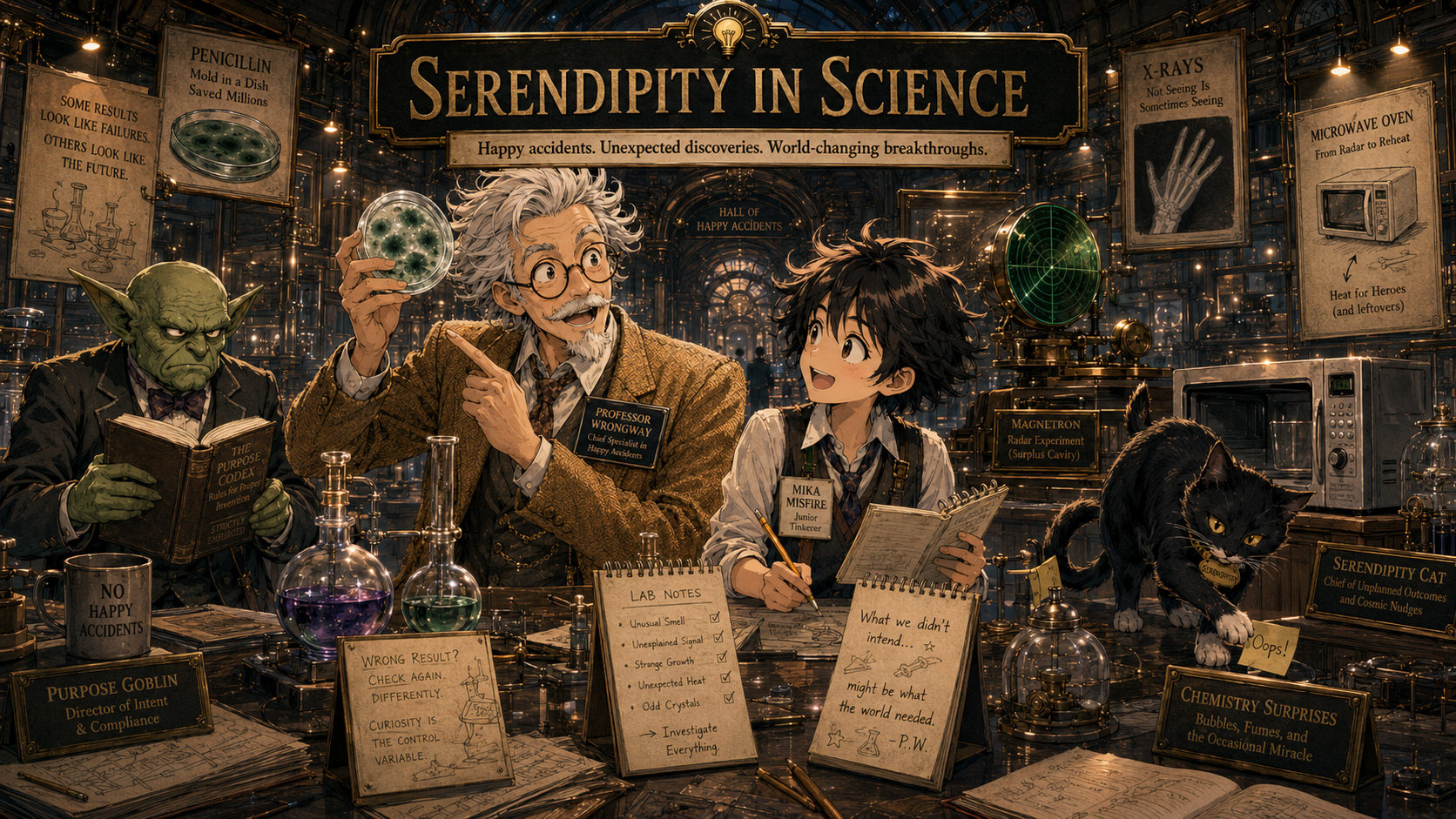
Science changes when someone notices the result that was not supposed to happen — and asks one more question.
The surprise matters only because someone recognizes that the surprise might be evidence.
A sample changes color. A culture is contaminated. A chocolate bar melts. A material behaves badly. The result does not match the plan.
Instead of throwing it away immediately, someone pauses long enough to ask: why did that happen, and what does it reveal?
The odd result becomes a testable clue. Sometimes it leads nowhere. Sometimes it changes medicine, kitchens, materials, or machines.
A contaminated dish is just a mess until someone notices the clear zone around the mold. A melted snack is just a nuisance until someone connects it to invisible energy.
Serendipity Cat may knock the beaker over, but the scientist still has to look carefully, test carefully, and prove what the accident means.
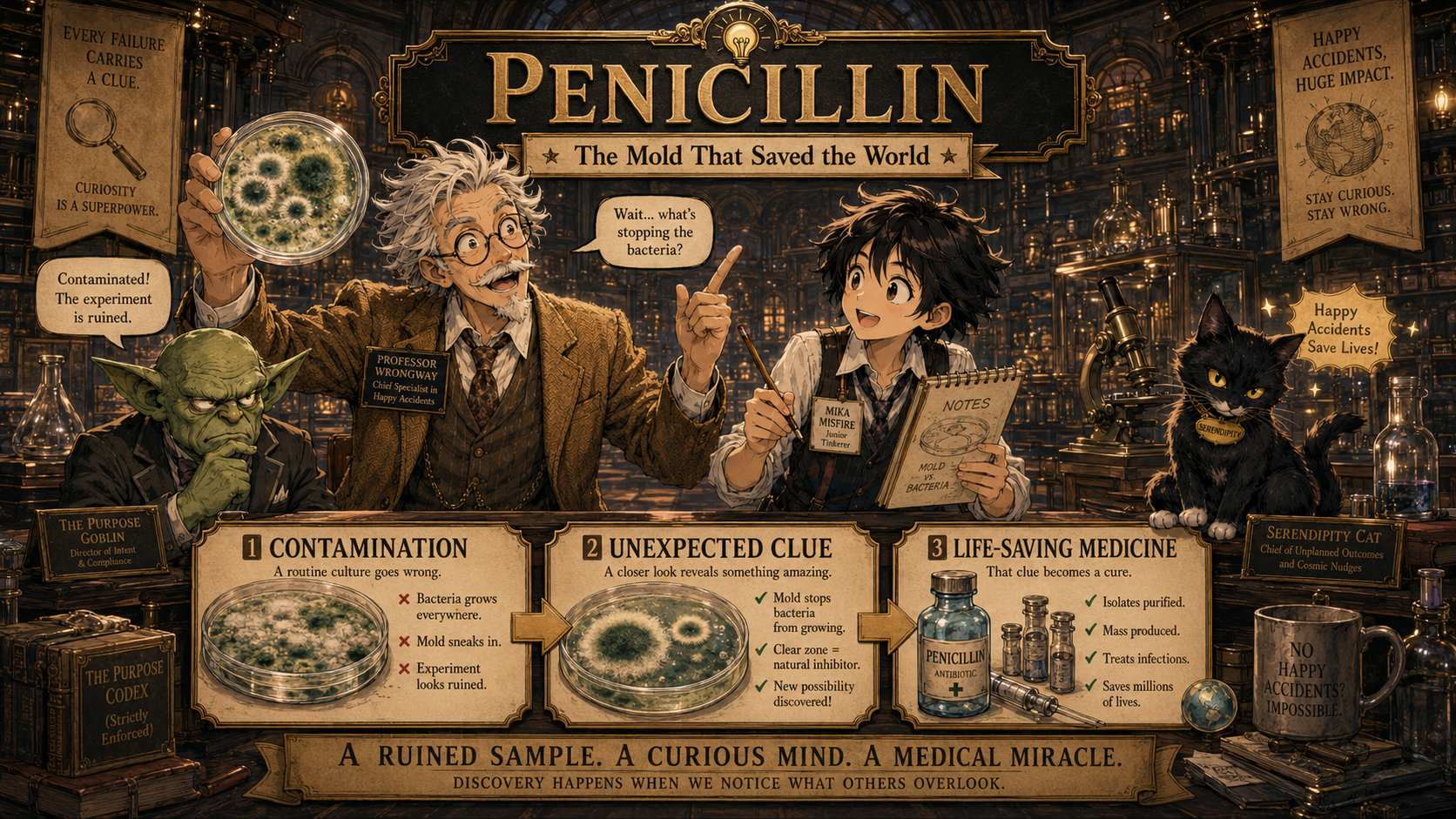
A spoiled culture became important because the mold appeared to stop bacteria from growing.
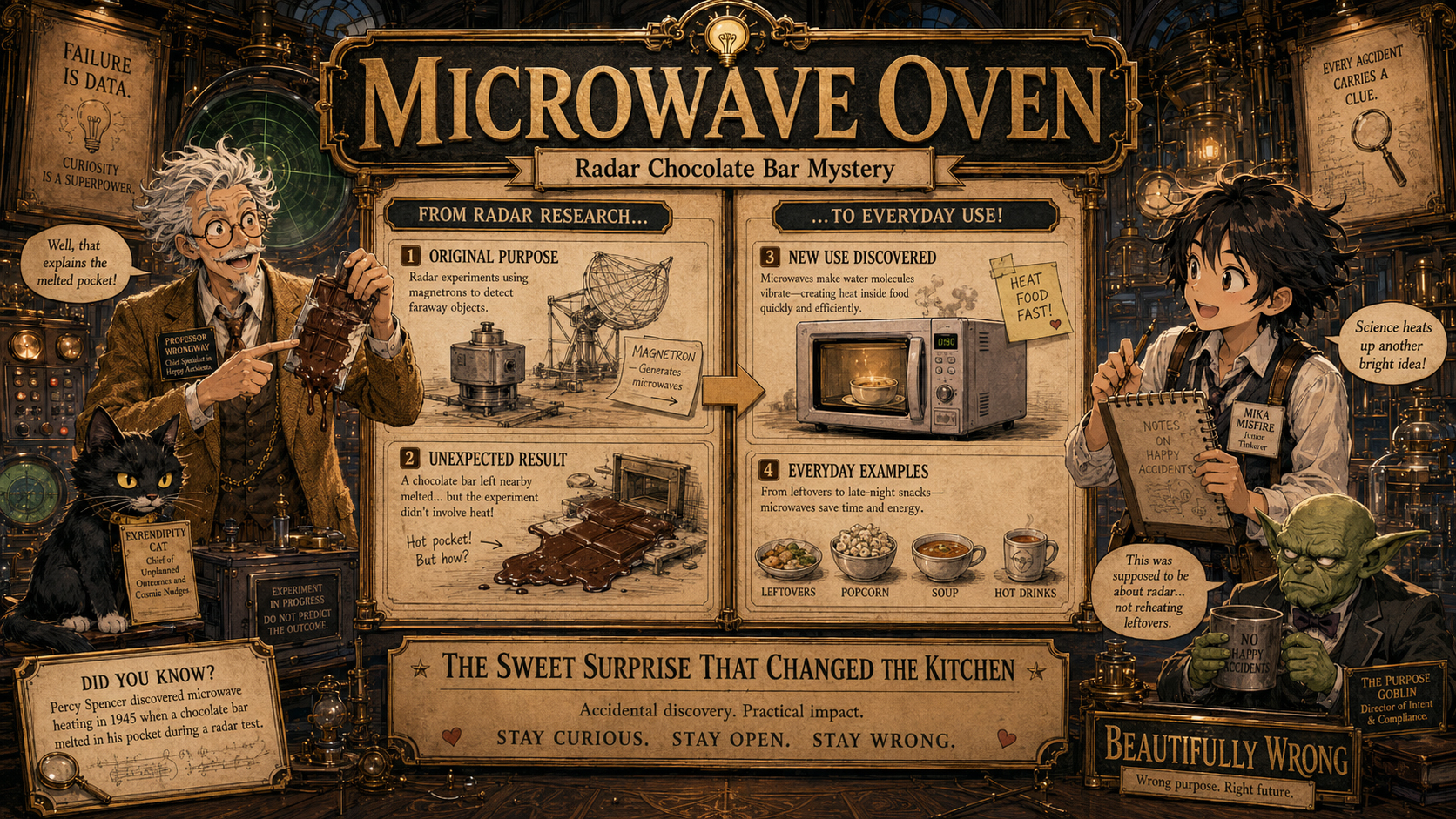
Radar research revealed a heating effect that eventually found a new home in everyday cooking.
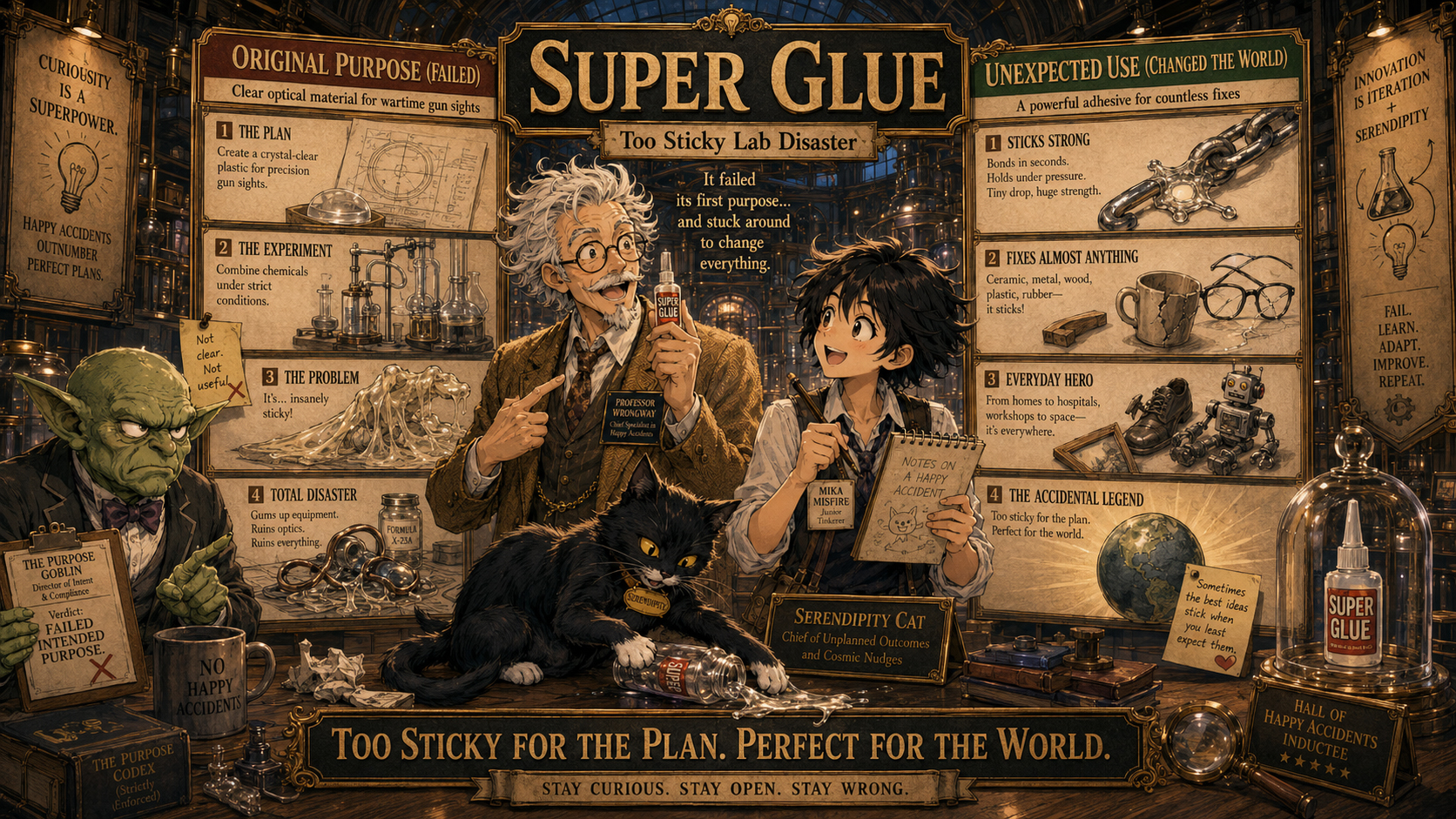
The original experiment hated the stickiness. The later use depended on it.
Beautifully Wrong science stories are not instructions to be careless. They are reminders that careful people can learn from unexpected results.
The accident creates the opening. Observation, testing, verification, and judgment create the discovery.
| Question | Why it matters | Purpose Goblin objection |
|---|---|---|
| What exactly happened? | The first job is to describe the event clearly, not explain it too quickly. | “It failed. File closed.” |
| Can the result be repeated? | A useful clue must survive more than one lucky moment. | “Repeat the mistake? Outrageous.” |
| What property appeared? | Heat, inhibition, adhesion, softness, strength, or human response may be the real discovery. | “That was not in the plan.” |
| Who might need this? | A strange laboratory behavior becomes useful only when it meets a real-world need. | “The original form says otherwise.” |
| What must be verified? | Safety, reliability, ethics, and proof matter before any claim becomes a real discovery. | “Finally, some paperwork.” |
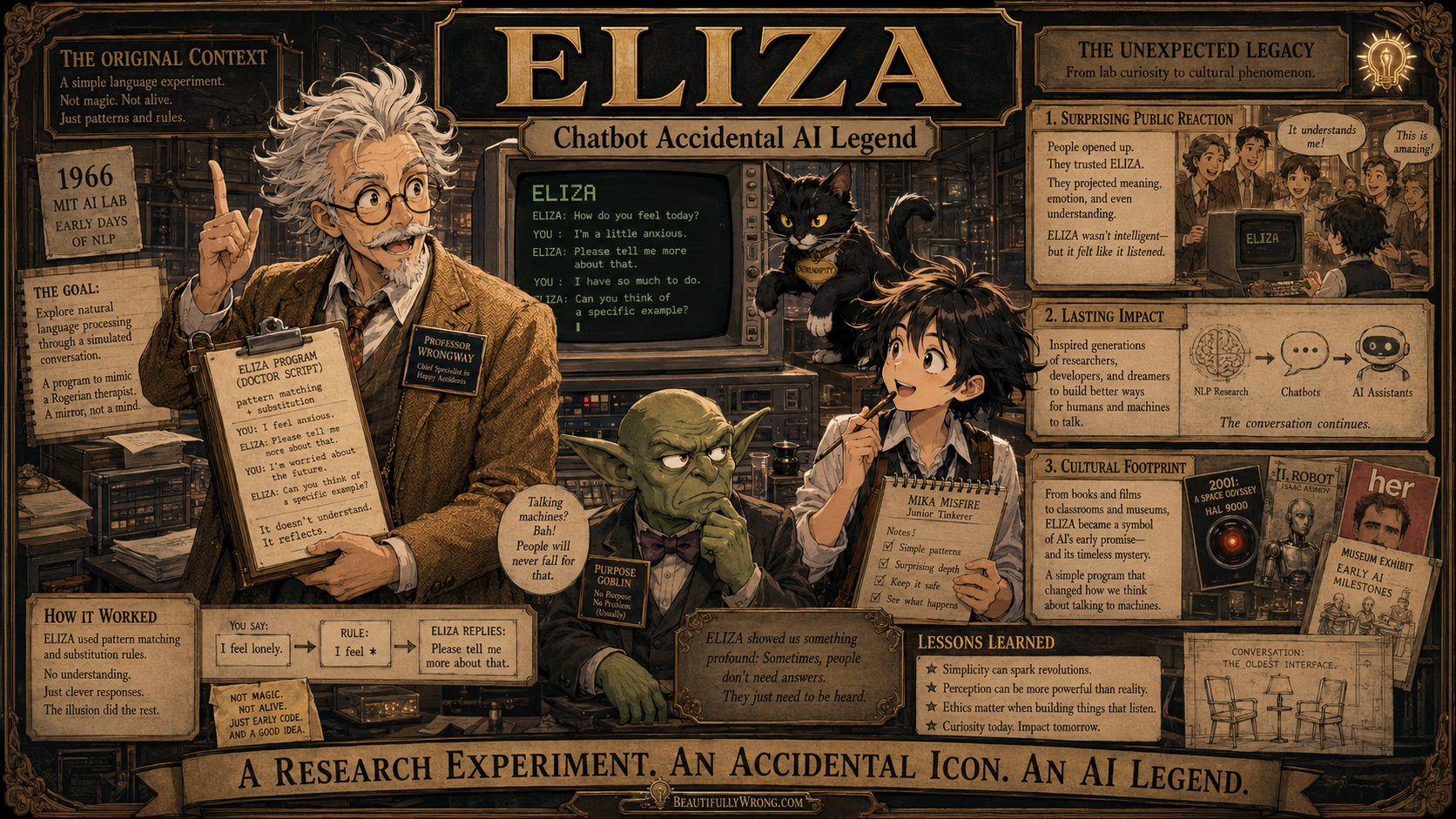
ELIZA was simple software, but people reacted to it as if the machine was listening. That reaction became part of the story.
Serendipity in science can appear in a petri dish, a radar lab, a materials experiment, or the unexpected way people respond to technology.
Explore ELIZACuriosity turns an accident into a question. Science turns the question into evidence.
Return to the Gallery