The experiment
A program simulated conversation using patterns, substitutions, and simple scripted replies.
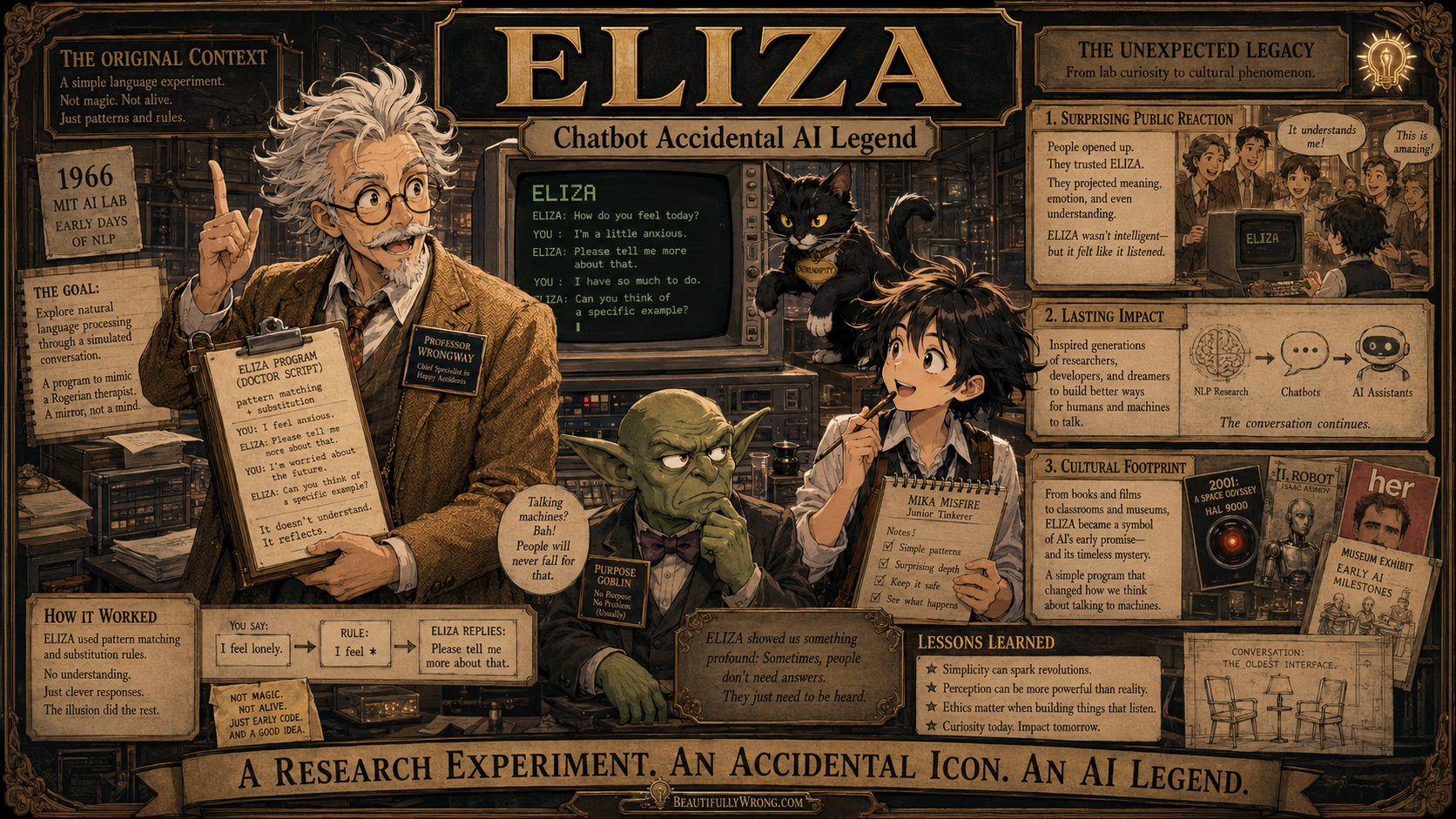
ELIZA was a language experiment, not a thinking machine. Then people reacted as if the machine was listening — and an AI legend was born.
ELIZA belongs in the Hall of Happy Accidents because its cultural impact came from the gap between what the program actually did and what people felt while using it.
ELIZA was an early experiment in natural-language interaction. It used pattern matching and scripted responses to simulate conversation, especially in its famous therapist-like mode.
People responded to the program as if it understood more than it did. That reaction helped shape the story of chatbots, AI assistants, and human-machine conversation.
ELIZA did not understand. But it revealed how badly people wanted machines to listen.
The Purpose Goblin saw a simple rule-based program and declared the mystery solved. Professor Wrongway looked at the users and saw the real exhibit.
Mika Misfire writes this under “unexpected human response.” The system was limited, but the reaction was powerful enough to echo through AI history.
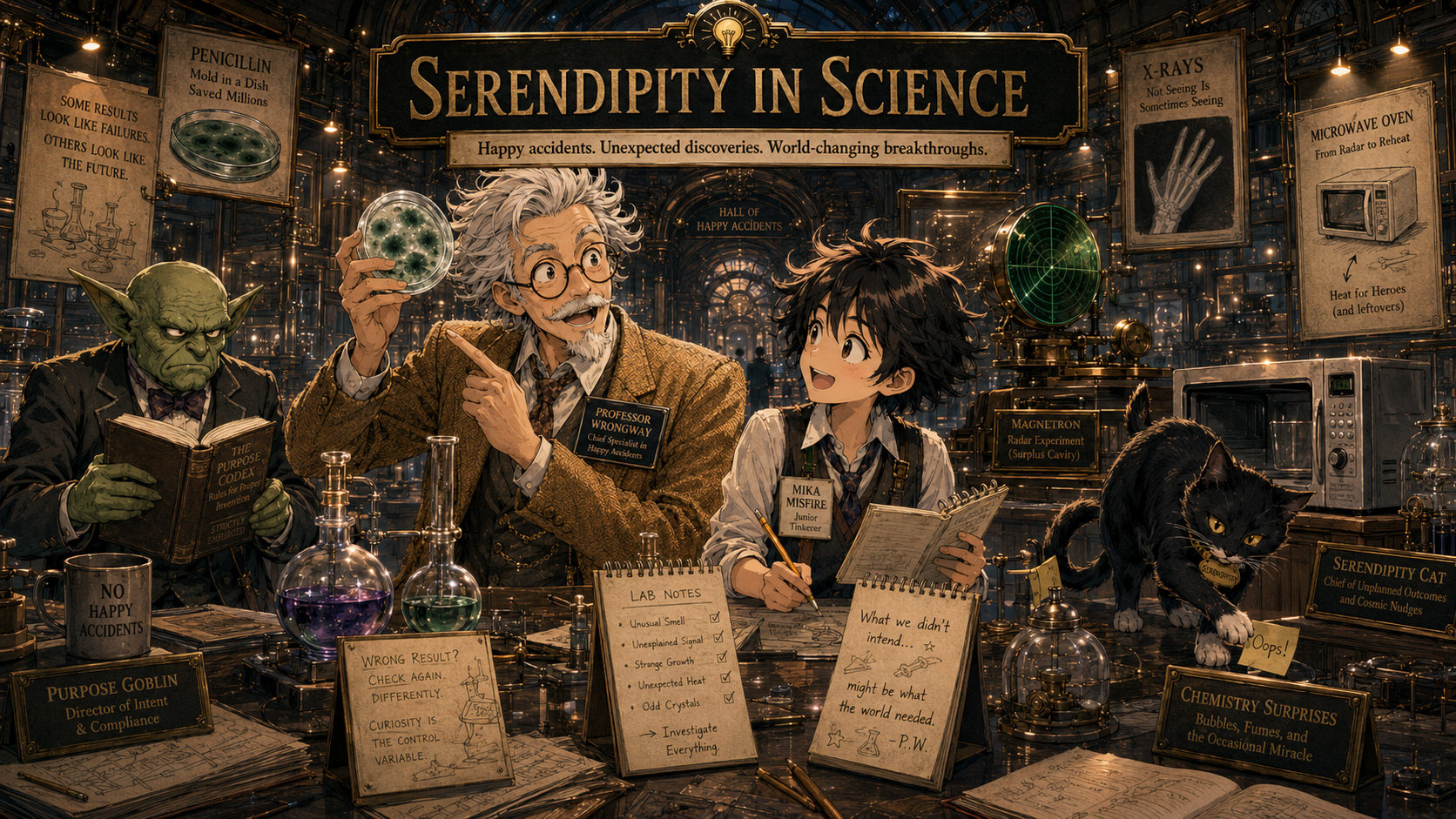
A program simulated conversation using patterns, substitutions, and simple scripted replies.
ELIZA did not truly understand meaning, emotion, memory, or human experience. The intelligence was mostly an illusion.
Users projected understanding onto the machine and felt the strange power of being answered.
ELIZA became an early symbol of chatbot history, AI imagination, and the psychology of conversation.
Not every Beautifully Wrong story is about a material behaving strangely. Sometimes the strange result is the way people respond to a technology.
ELIZA’s importance is not that it was secretly intelligent. Its importance is that it exposed something important about humans: we look for meaning, empathy, and presence in conversation.
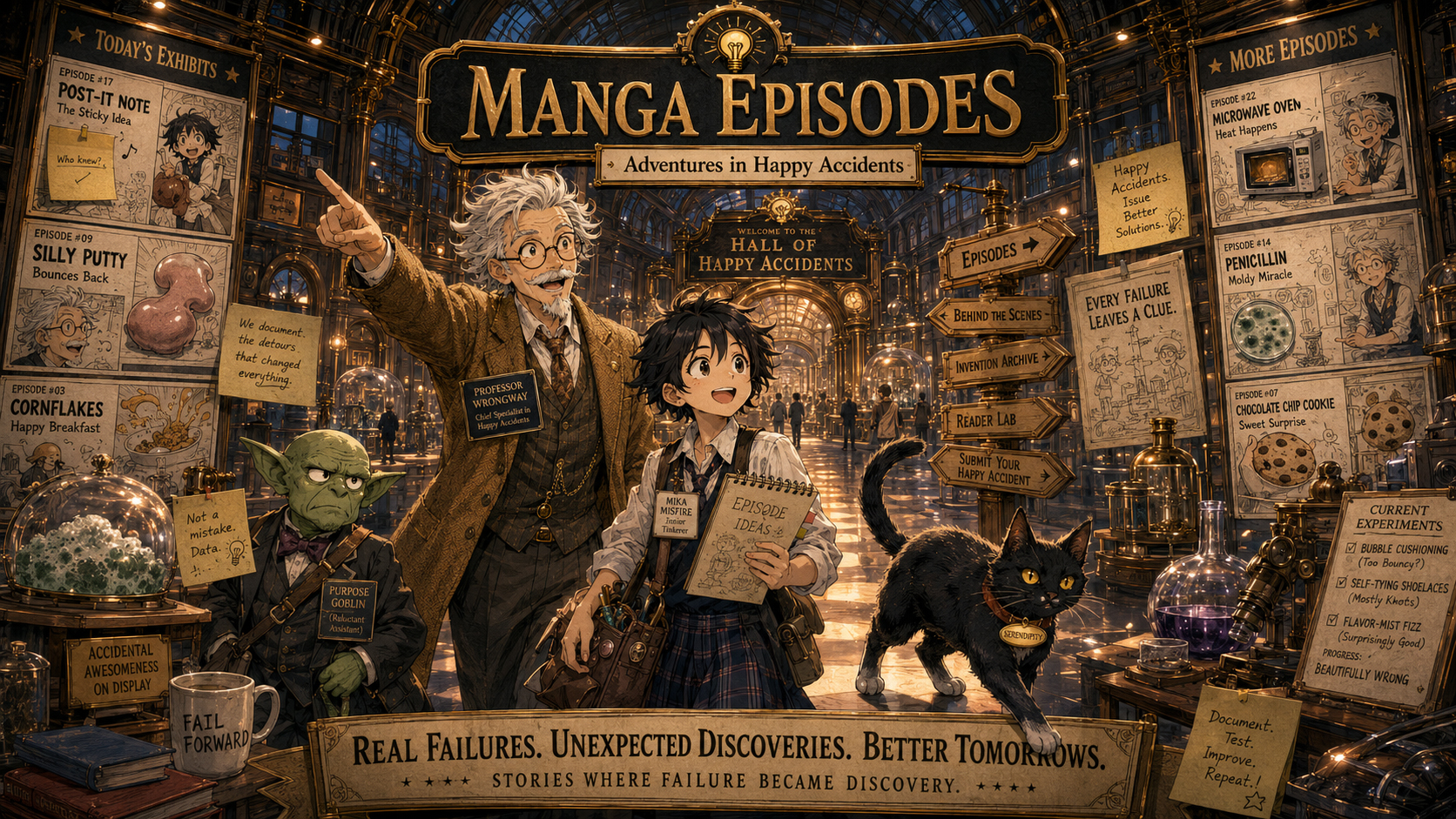
ELIZA gives Professor Wrongway a new kind of exhibit: not a glue, not a bottle, not a dish, but a mirror.
The Purpose Goblin insists the program is only rules. Mika Misfire asks why rules can still make people feel heard.
Visit the Manga EpisodesELIZA did not understand us. It helped us understand ourselves.
Next: Manga Episodes