The target
Observe bacterial cultures under controlled conditions. Clean technique and reliable samples mattered.
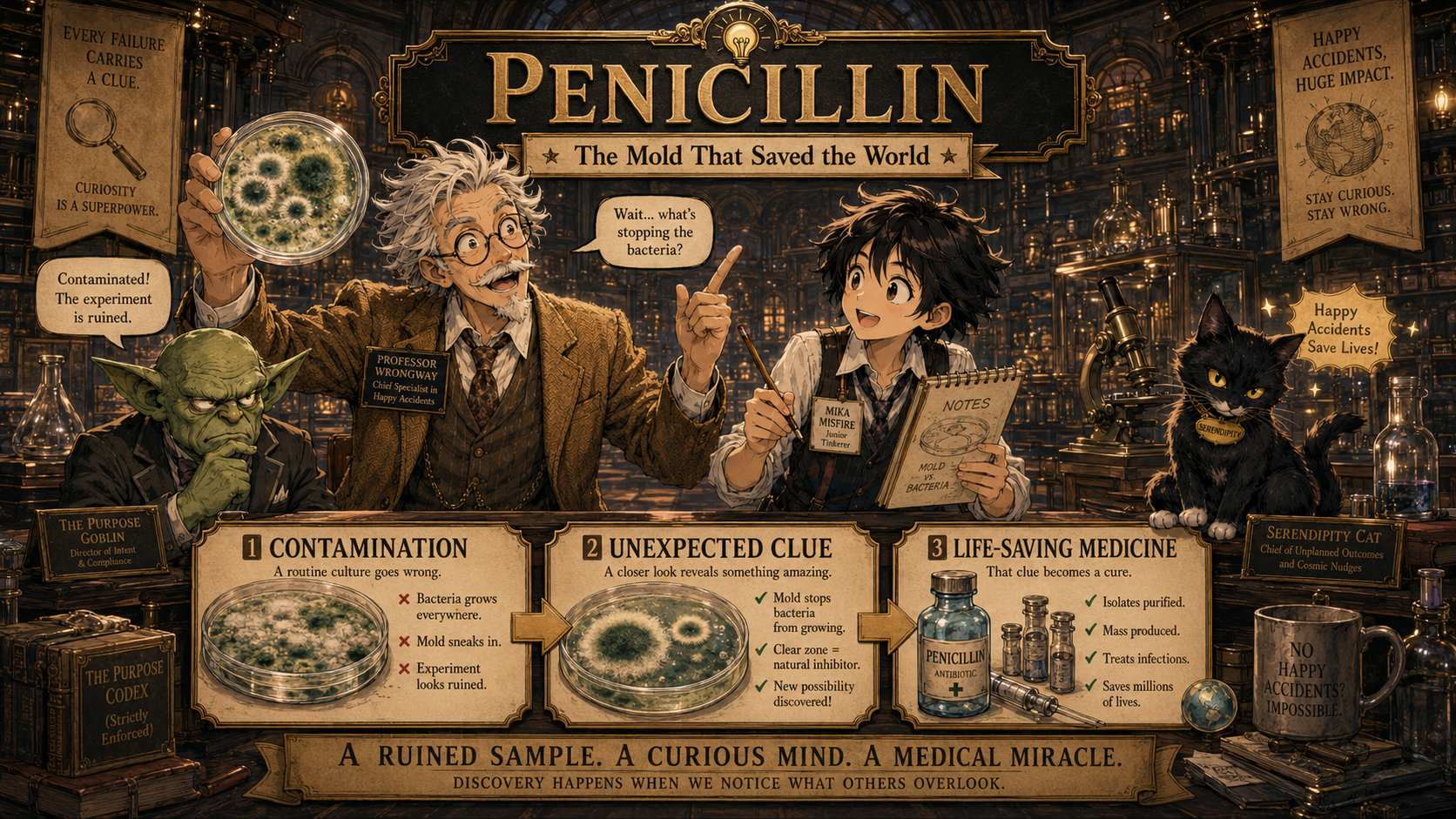
A spoiled culture dish looked like a ruined experiment. Then someone noticed the mold was stopping bacteria nearby.
Penicillin belongs in the Hall of Happy Accidents because the “ruined” sample revealed a life-changing biological effect.
The laboratory work depended on observing bacterial cultures. A contaminated plate normally meant the sample was compromised, messy, and no longer useful for the planned test.
The mold was not just an intruder. Around it, bacterial growth appeared inhibited. That strange clear zone became a scientific clue with enormous medical consequences.
A ruined dish became useful because someone looked at the ruin carefully.
The Purpose Goblin saw contamination and wanted the dish discarded. Professor Wrongway saw a question: why were the bacteria failing near the mold?
Mika Misfire writes this as one of the museum’s highest-level lessons: the important part of the accident was not the mold itself, but the observed effect.
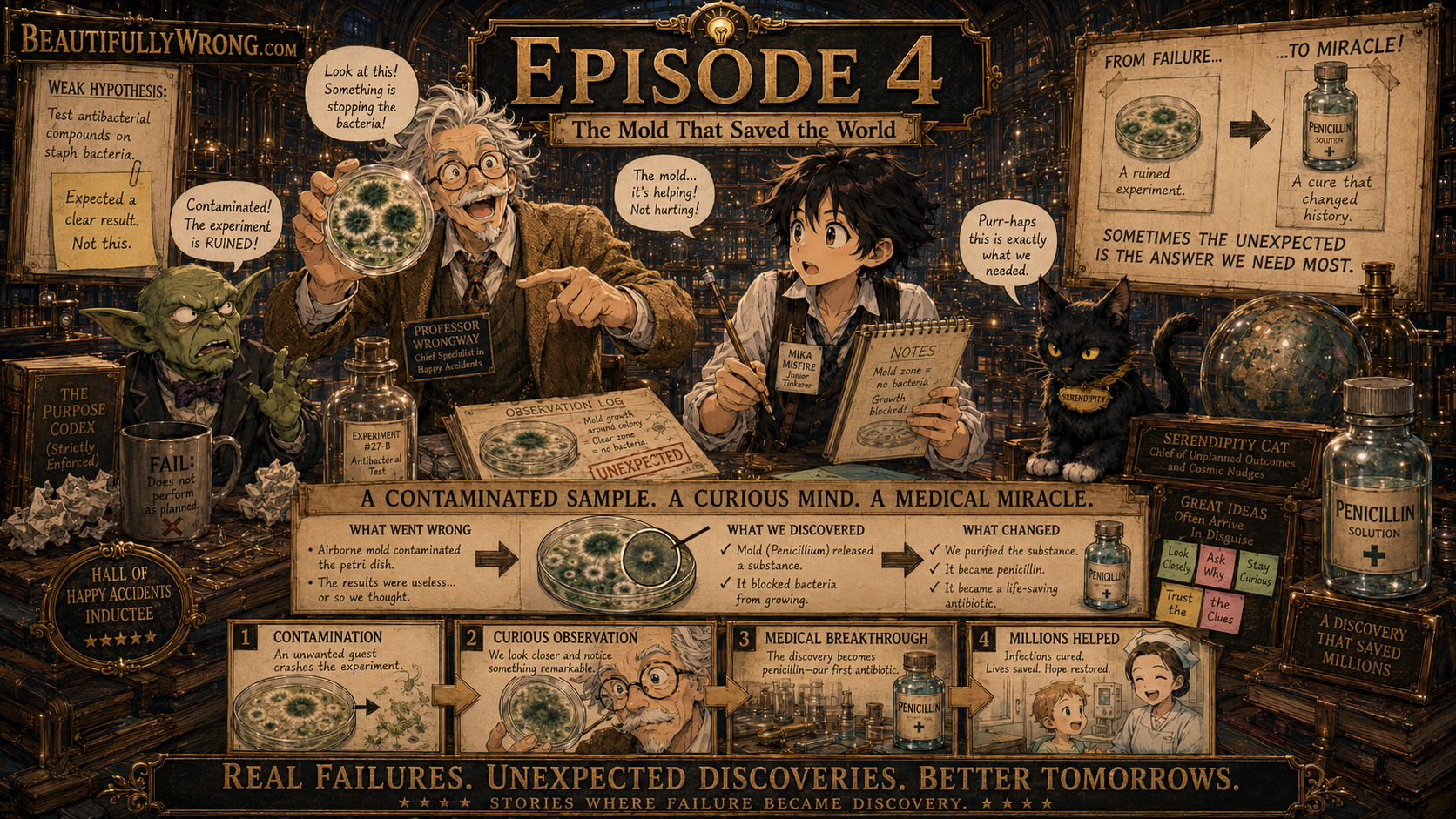
Observe bacterial cultures under controlled conditions. Clean technique and reliable samples mattered.
Mold appeared where it did not belong. The first impression was simple: the sample was spoiled.
Bacteria did not grow normally around the mold. The accident had created a visible clue.
The clue led toward antibacterial medicine, later work, refinement, production, and medical impact.
A scientific accident becomes important only when it is observed, questioned, repeated, tested, and developed. The petri dish did not become medicine by magic. It became a clue.
In the Penicillin story, the failure was not the final answer. It was the first visible sign that something powerful was happening.
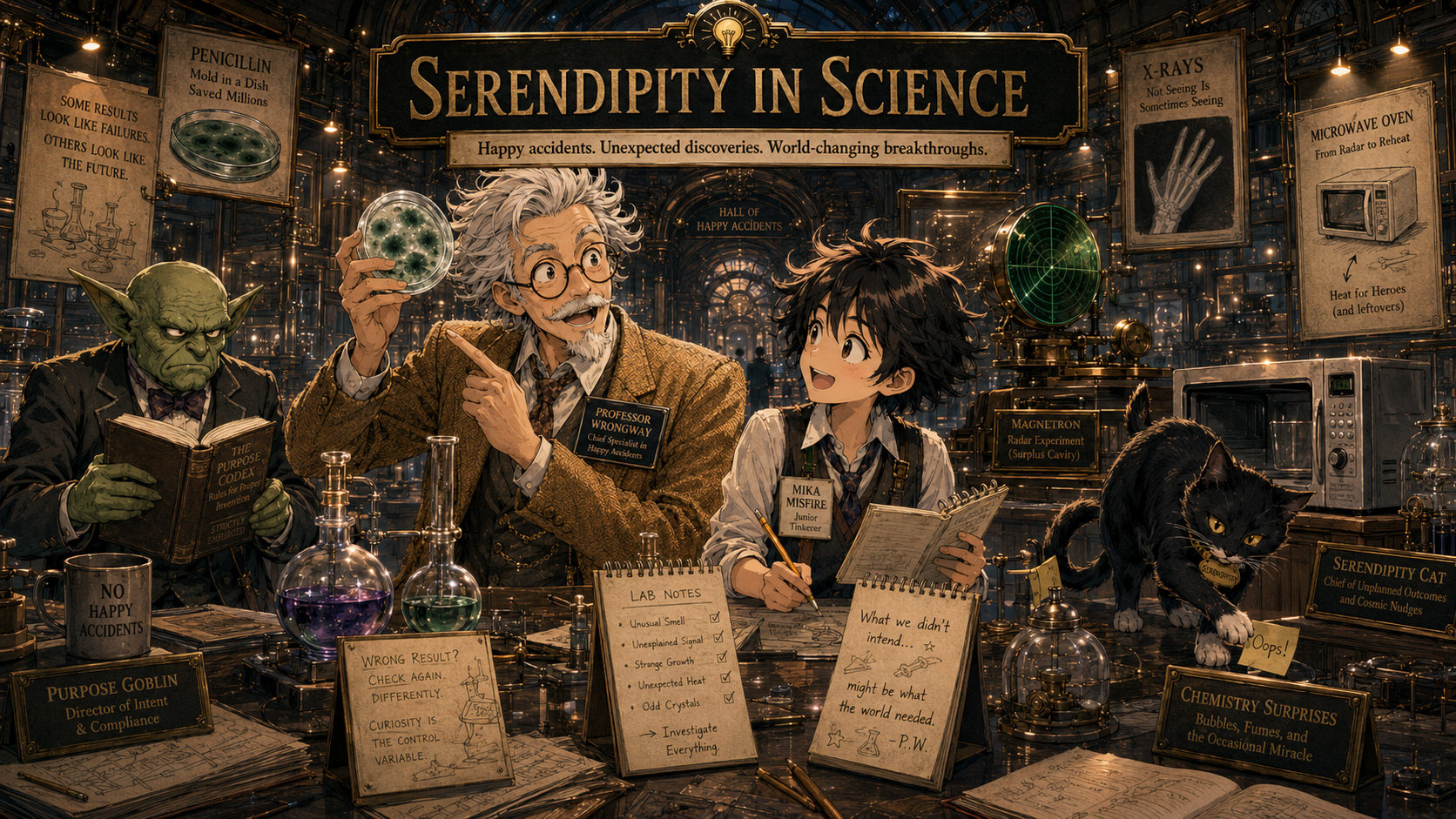
A mess is only a mess until the pattern inside it becomes visible.
That does not mean careless work is good science. It means careful observation can rescue meaning from an unexpected result.
Explore Serendipity in ScienceThe dish looked ruined. The clue was priceless.
Next Exhibit: Bubble Wrap