The target
Create an unusual wall covering with a bubbly, padded texture.
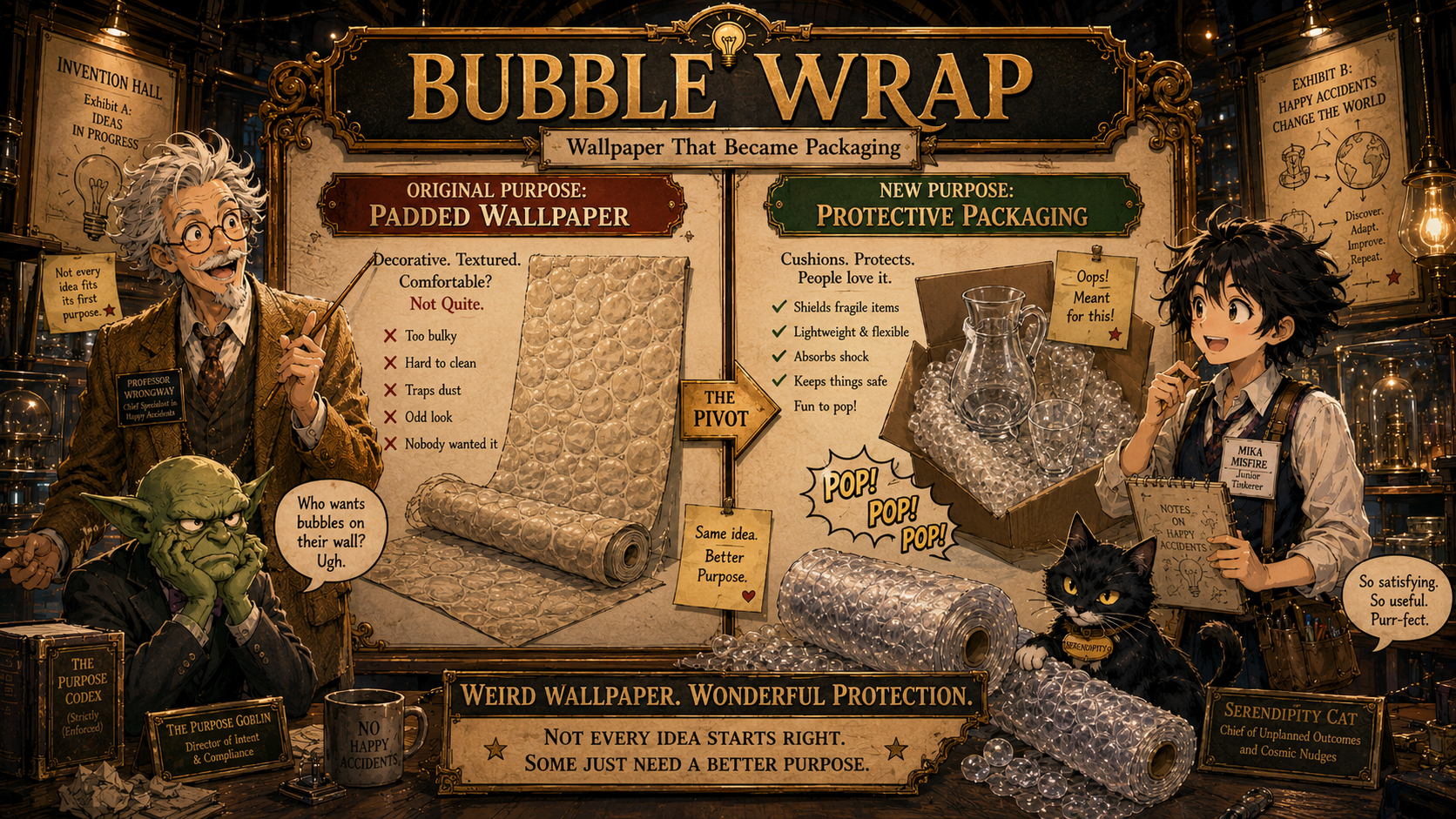
It was a strange idea for walls. Then someone realized those little bubbles were perfect for protecting fragile things.
Bubble Wrap belongs in the Hall of Happy Accidents because the same texture that made it strange as wallpaper made it useful as cushioning.
The idea began as textured or padded wallpaper. It was supposed to be decorative, modern, and interesting on the wall.
The bubbles created lightweight cushioning. That made the material far better for wrapping, packing, protecting, and absorbing shock than for decorating rooms.
Nobody wanted bubbles on the wall. Fragile things wanted bubbles everywhere.
The Purpose Goblin complained that padded wallpaper was odd, bulky, and unwanted. Professor Wrongway noticed the important part: the bubbles protected.
Mika Misfire calls this a customer-location pivot: same material, different place, completely different value.
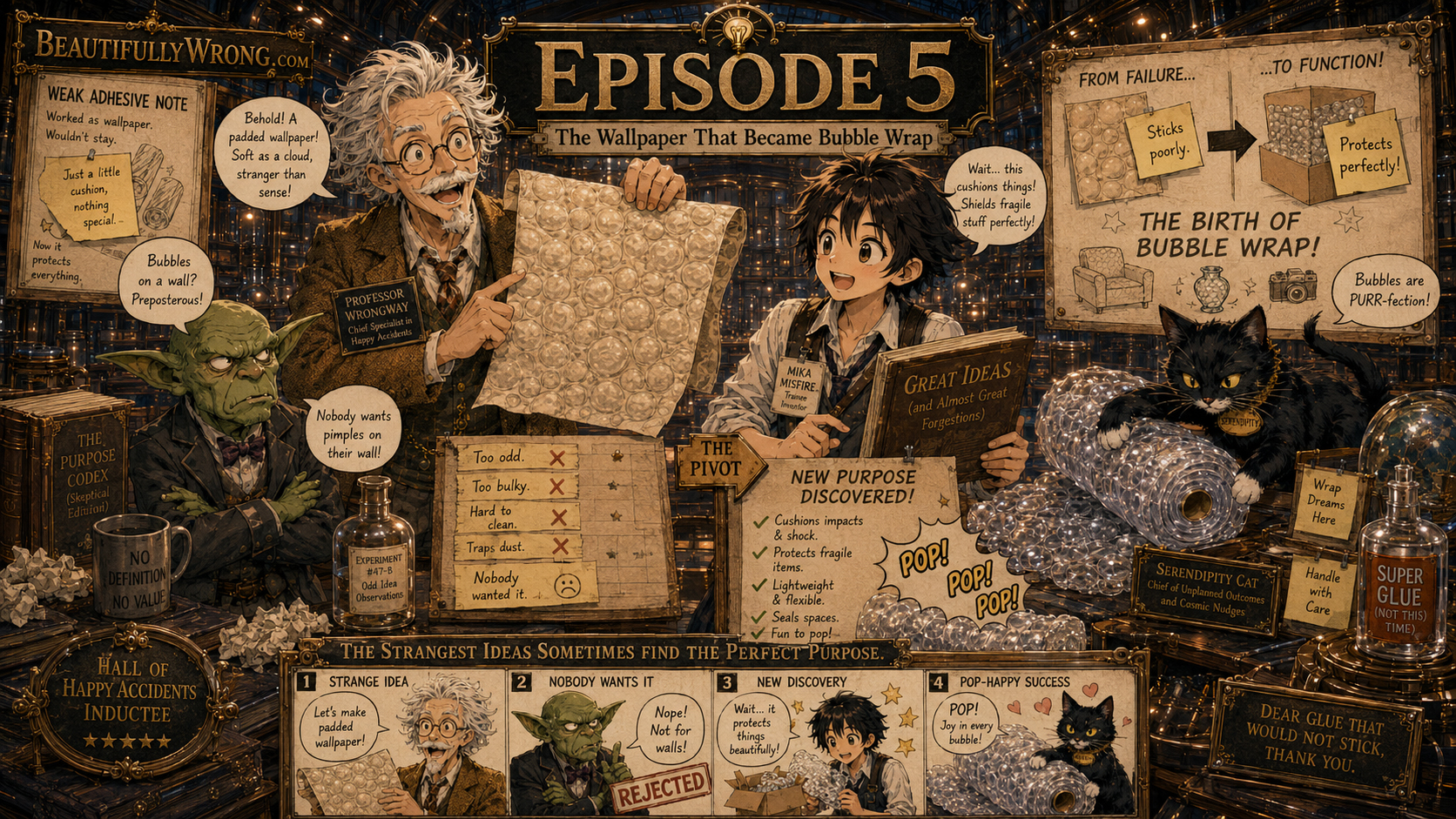
Create an unusual wall covering with a bubbly, padded texture.
The wallpaper idea did not catch on. It looked strange, felt impractical, and did not solve a strong wall problem.
The bubble texture cushioned impact. That property mattered more than the decorative idea.
The material became protective packaging: light, flexible, useful, and famously poppable.
A product can fail because it is in the wrong environment. Bubble Wrap did not need a better wall. It needed a different job.
The invention became useful when its physical behavior — cushioning — was matched to the right problem: protecting fragile objects in motion.
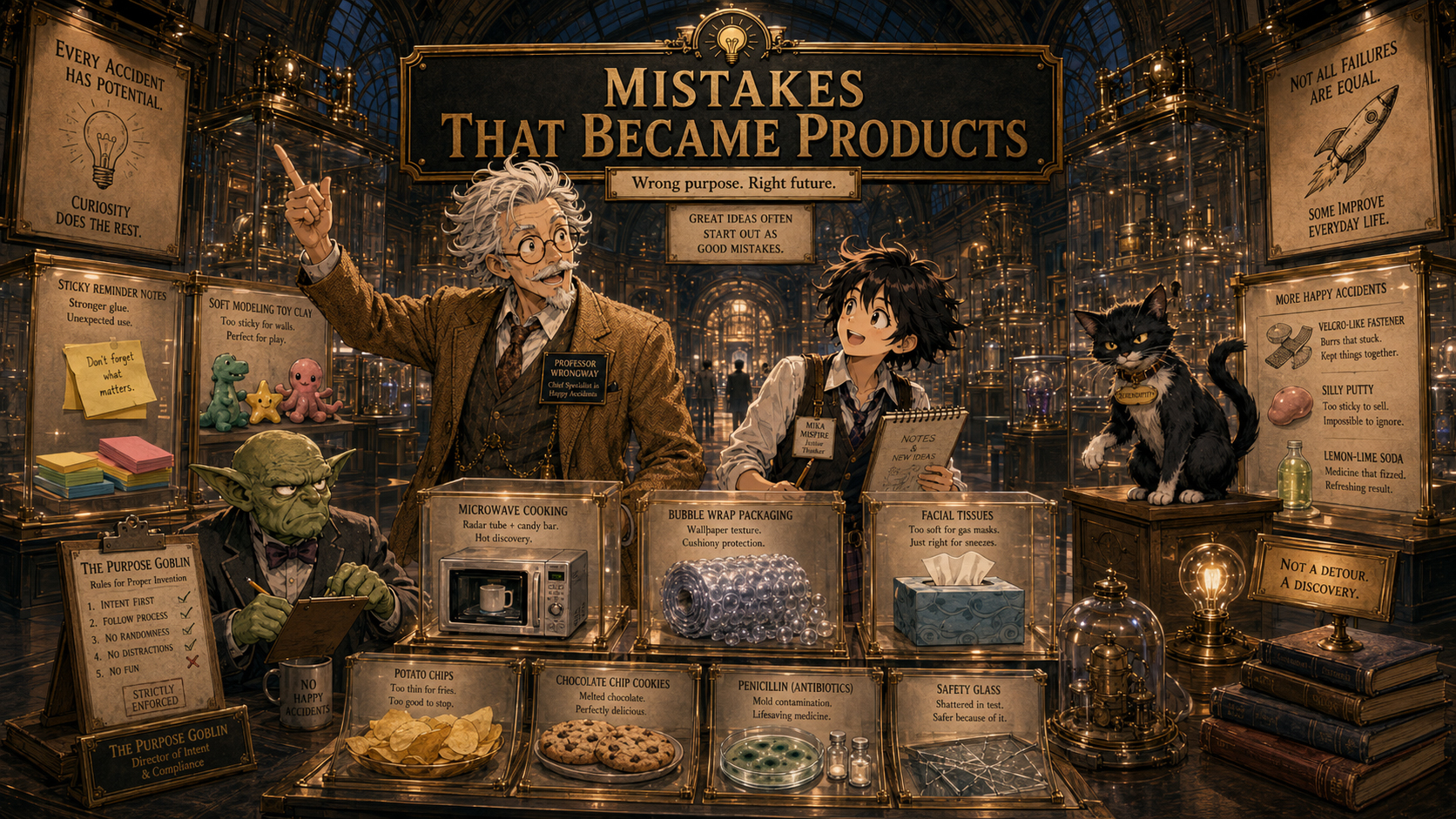
A homeowner may reject bubbly wallpaper. A shipper may love lightweight protection.
Beautifully Wrong product pivots often happen when the invention moves from the wrong market to the right one.
See More Product PivotsThe wallpaper failed. The packaging worked.
Next Exhibit: Kleenex