The culture
The lab expects a controlled bacterial culture. The dish is supposed to be clean, predictable, and useful.
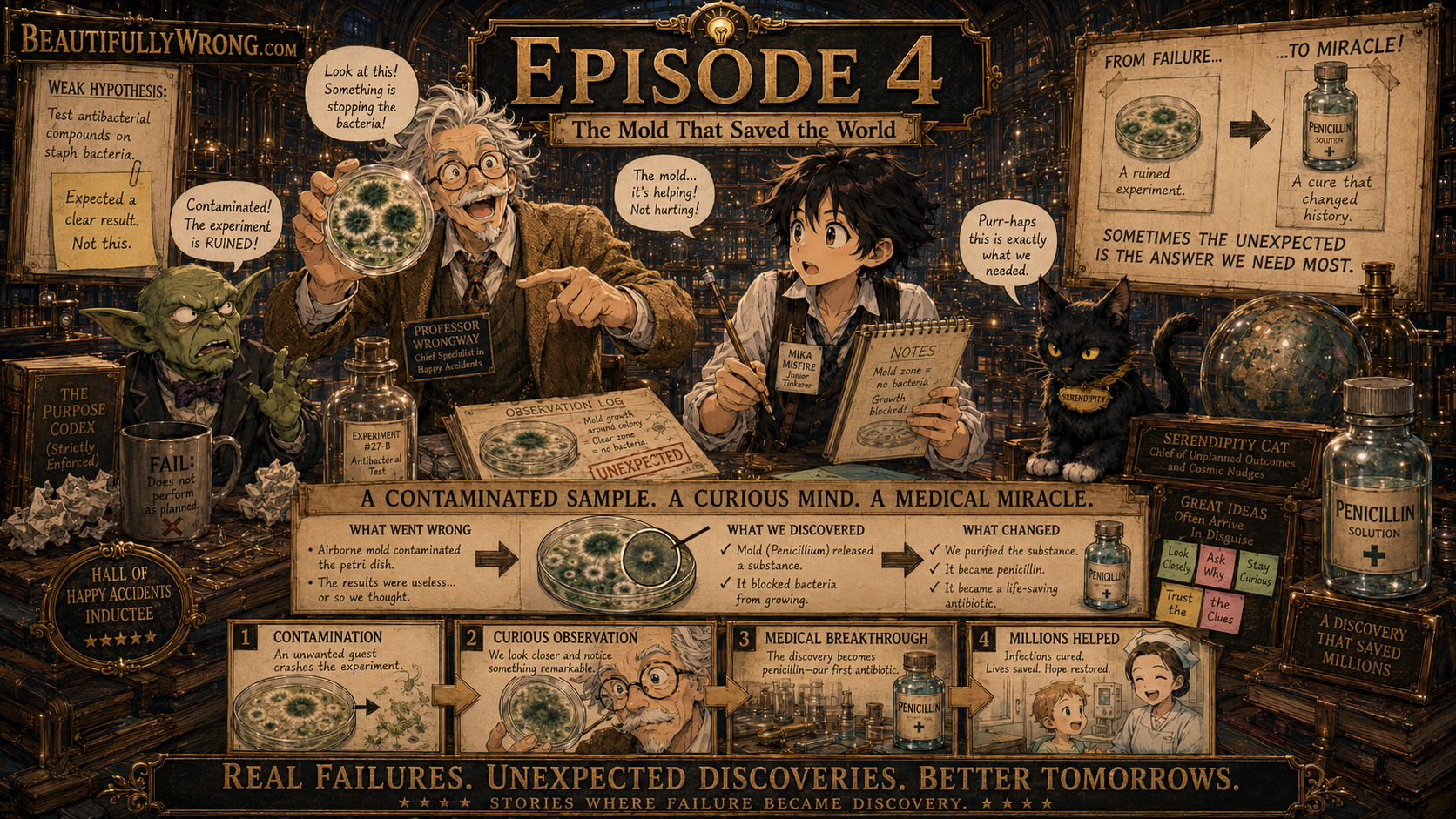
The dish looked ruined. The Purpose Goblin called it contamination. Professor Wrongway saw the clear space around the mold — and stopped the trash can.
Episode 4 teaches the museum’s science rule: a failed experiment can still contain a real observation.
Professor Wrongway brings Mika into the laboratory wing, where a sealed glass case holds a dish labeled Contaminated Culture: Do Not Ignore.
The Purpose Goblin is already reaching for the rejection stamp. “Ruined sample,” he says. “No further discussion. No poetry. No heroic mold.”
Mika leans closer. The bacteria are not growing near the mold. The mistake has drawn a boundary. Serendipity Cat taps the glass with one paw, as if to say: look at the space around it.
Contamination normally is a problem. A spoiled dish usually means the controlled experiment has failed.
But Professor Wrongway points to the difference between mess and meaning: the failure still produced an observable pattern. That pattern is where the story begins.
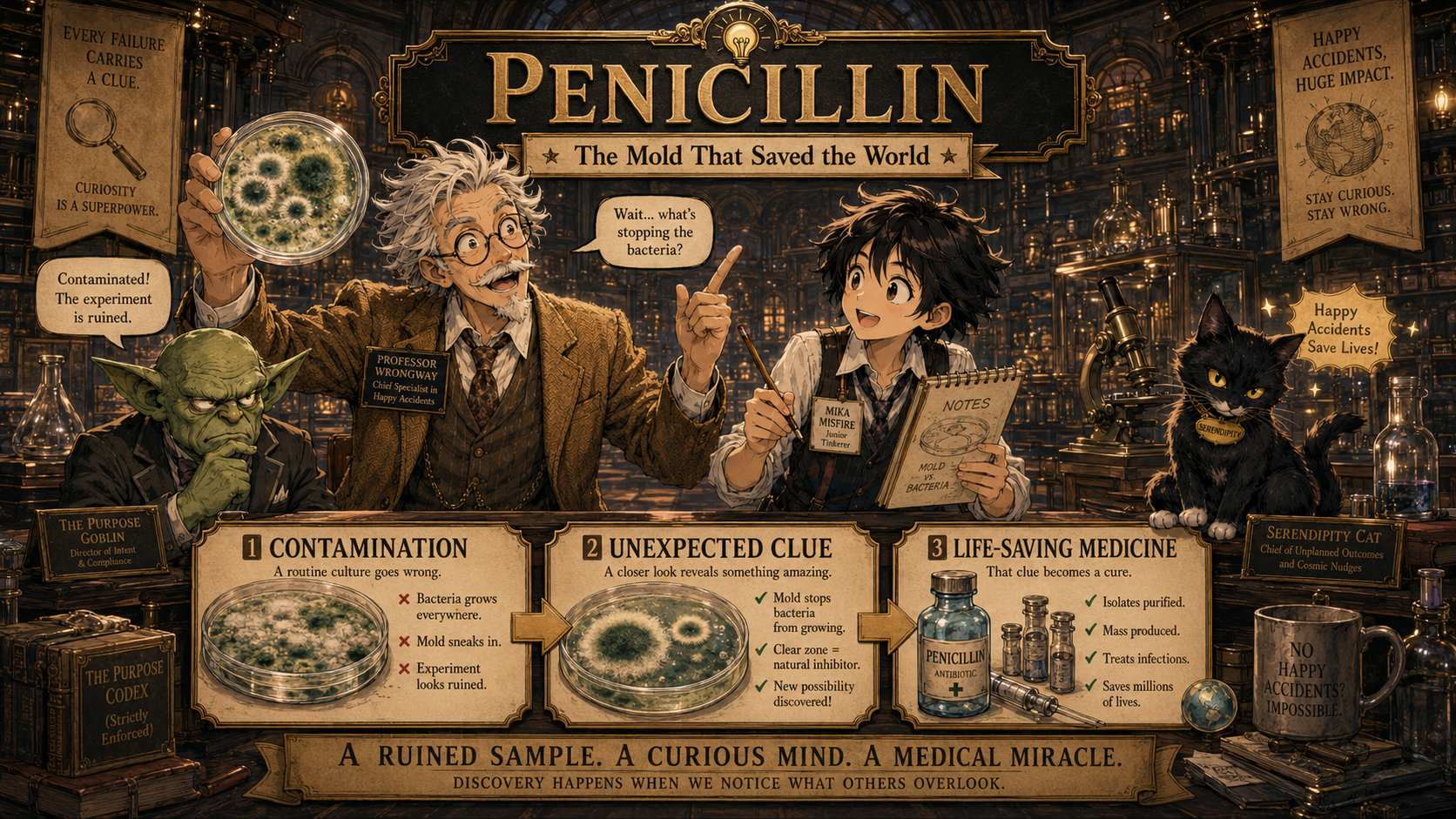
The lab expects a controlled bacterial culture. The dish is supposed to be clean, predictable, and useful.
Mold appears where it does not belong. The Purpose Goblin stamps the file “ruined.”
Mika notices bacteria are failing near the mold. The contamination has created evidence.
Professor Wrongway reveals the larger path: a ruined sample becomes a clue toward medicine.
“The dish was ruined for the first question. It was perfect for the better question.”
Stops the rejection stamp because the failed culture has produced a visible pattern worth investigating.
Notices the important space: the area around the mold where bacterial growth appears blocked.
Makes the strongest objection of the season. He is right that contamination matters, but wrong to ignore the clue.
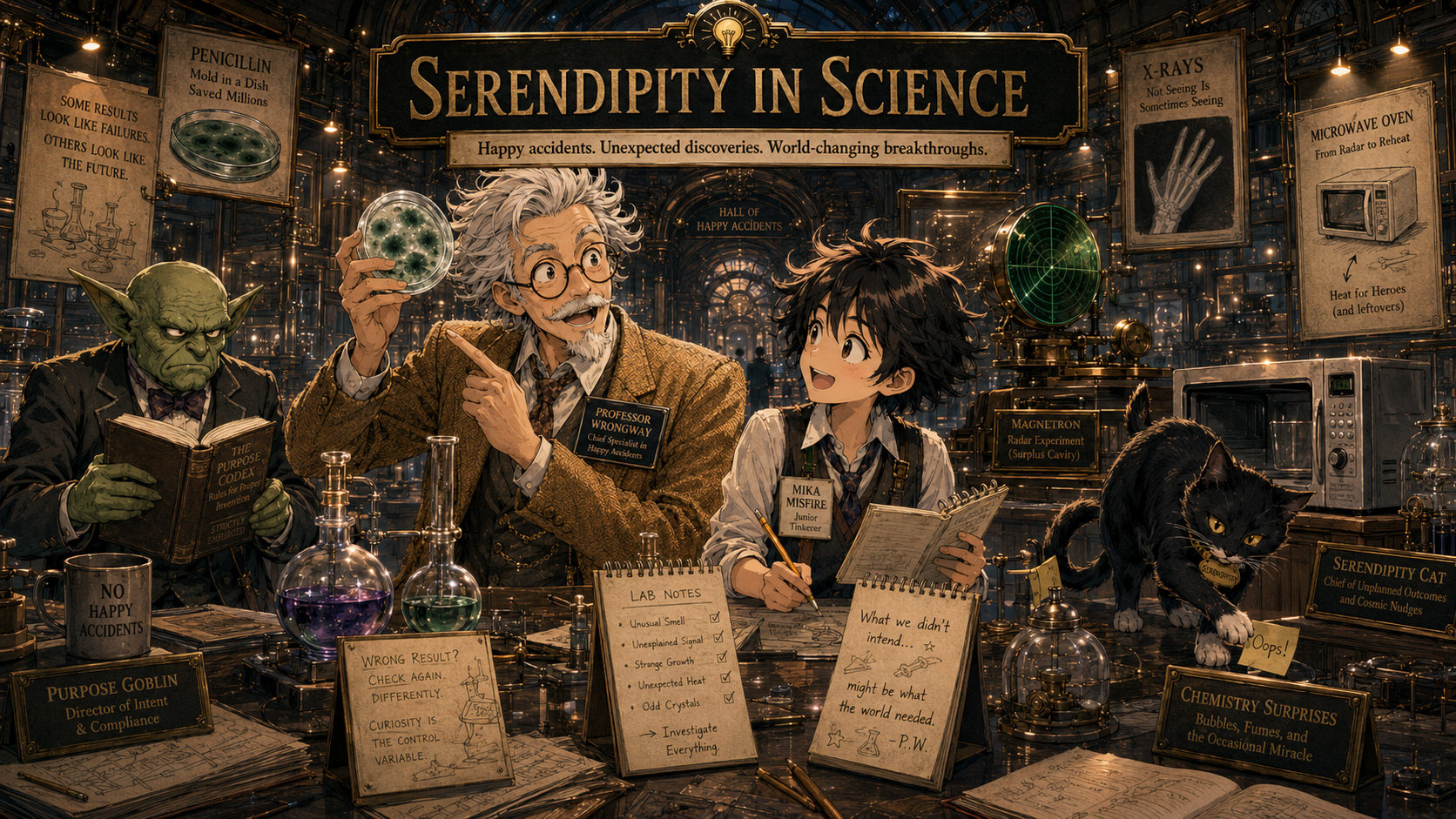
The mold did not become medicine in a single dramatic moment. The dish became important because someone noticed a specific effect and followed it.
Episode 4 is the serious heart of the series: curiosity must be disciplined. The best happy accidents still need proof, testing, refinement, and judgment.
Study Serendipity in ScienceEpisode 5 moves from the lab bench to the shipping box, where weird texture finds its purpose.
Continue to Episode 5