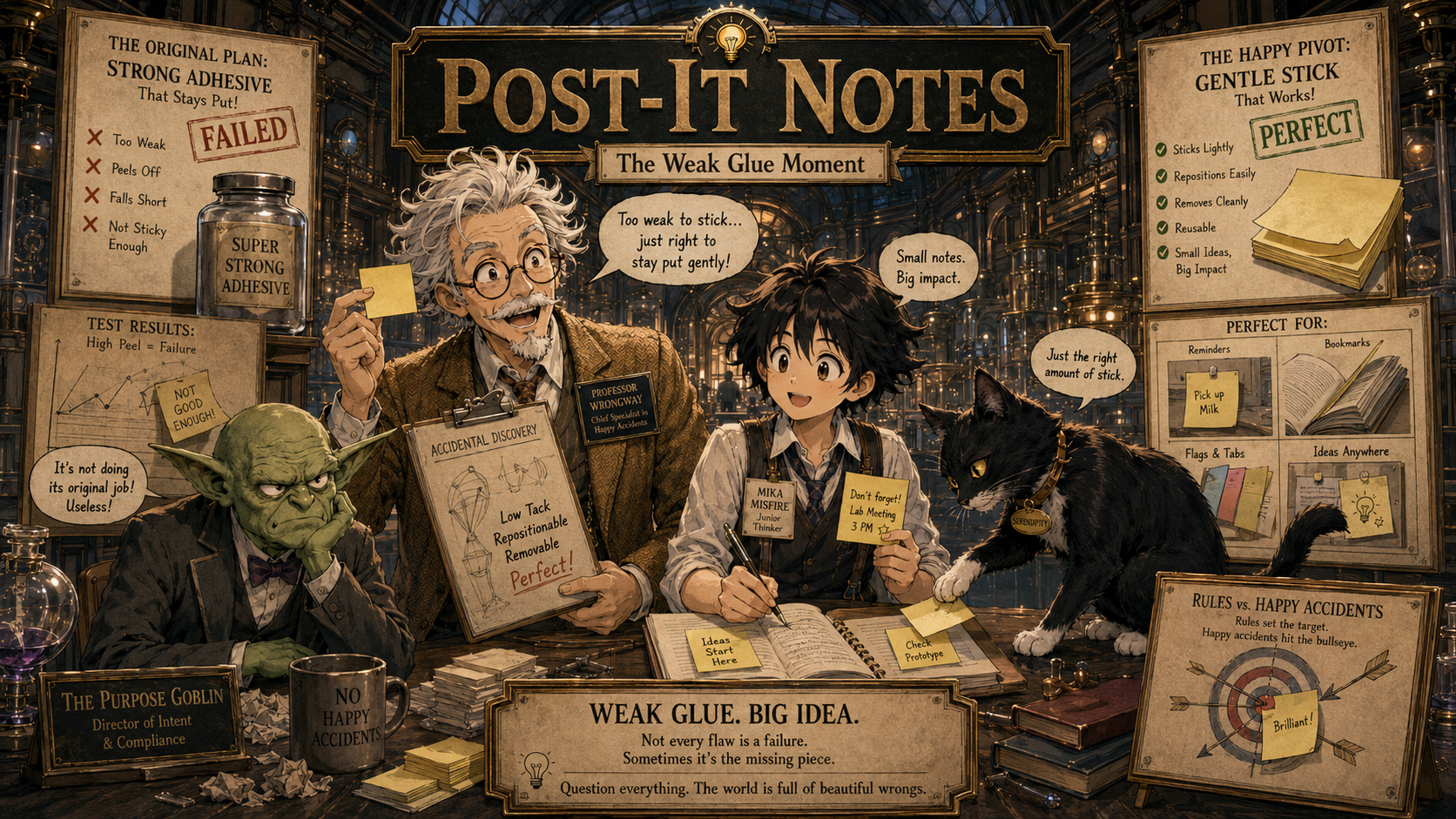
Exhibit A
Weak Glue
The adhesive failed as a strong glue. It succeeded as a removable reminder system.
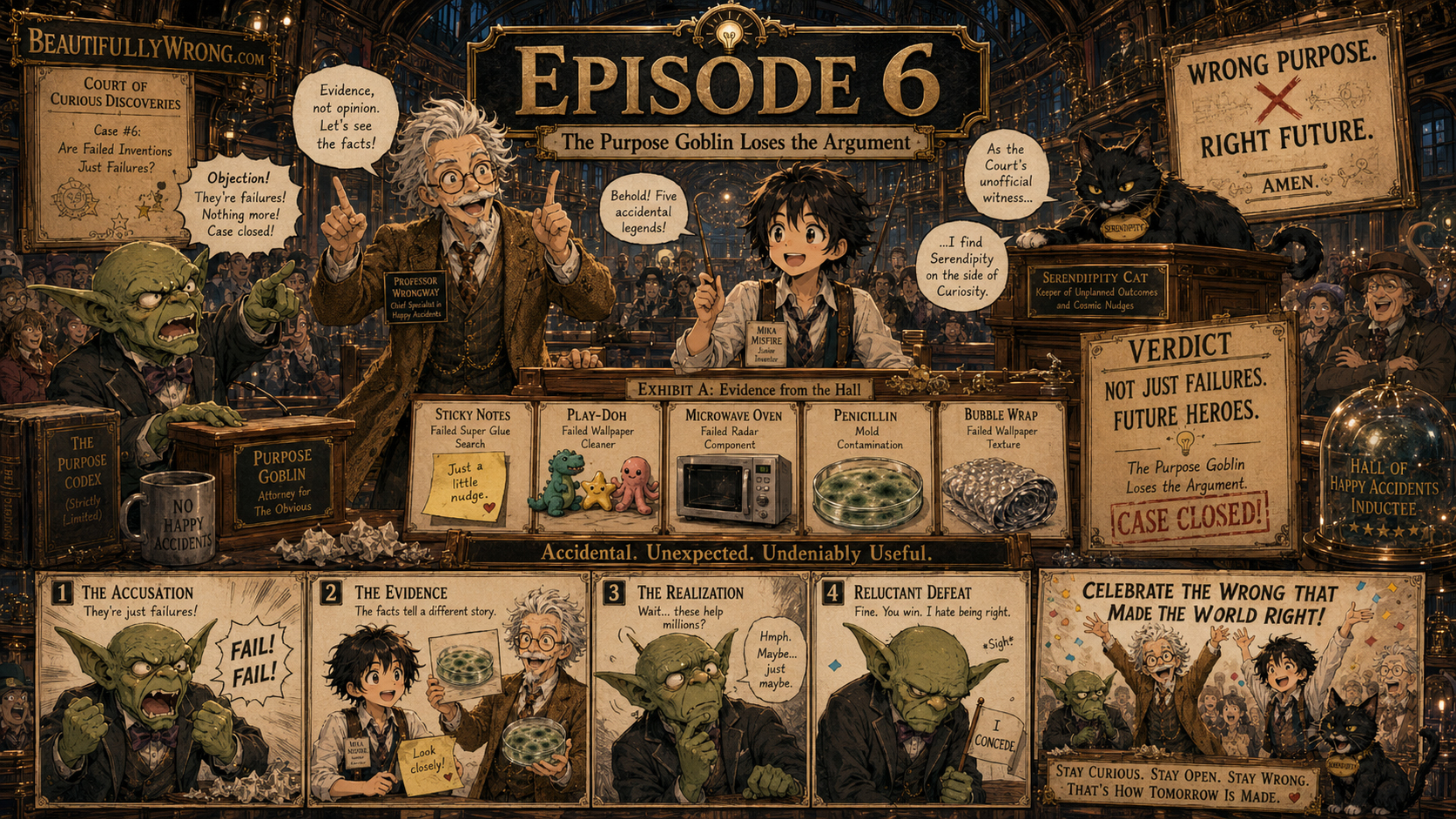
The museum goes to trial. The Purpose Goblin says failed inventions are just failures. Professor Wrongway brings evidence.
Episode 6 puts the entire Beautifully Wrong idea on trial: is a failed purpose the end of the story, or the beginning of the second act?
The Hall of Happy Accidents transforms into the Court of Curious Discoveries. The Purpose Goblin arrives with a mountain of rejected forms, stamped files, and one very confident opening argument.
“A failure is a failure,” he declares. “Weak glue failed. Wallpaper cleaner failed. Radar snacks failed. Moldy dishes failed. Bubbly wallpaper failed. I rest my case.”
Professor Wrongway smiles. Mika Misfire wheels in five glowing exhibit cases. Serendipity Cat takes the judge’s bench without permission.
The Purpose Goblin is not foolish. He is defending the original job. The problem is that history is not limited to the original job.
Professor Wrongway’s case is simple: a failed first purpose can still reveal a useful property, behavior, or clue. Mika proves it exhibit by exhibit.
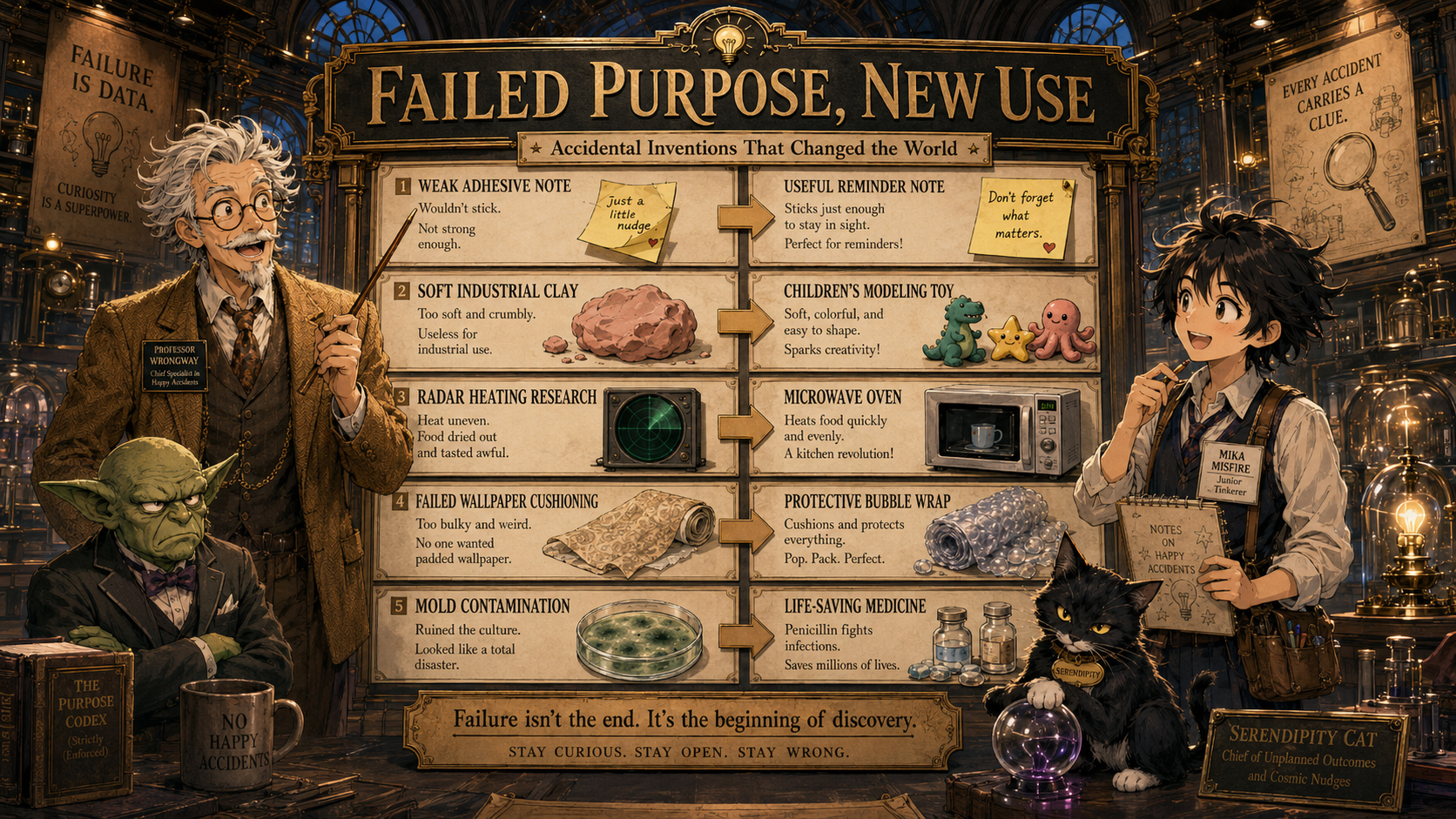
The adhesive failed as a strong glue. It succeeded as a removable reminder system.
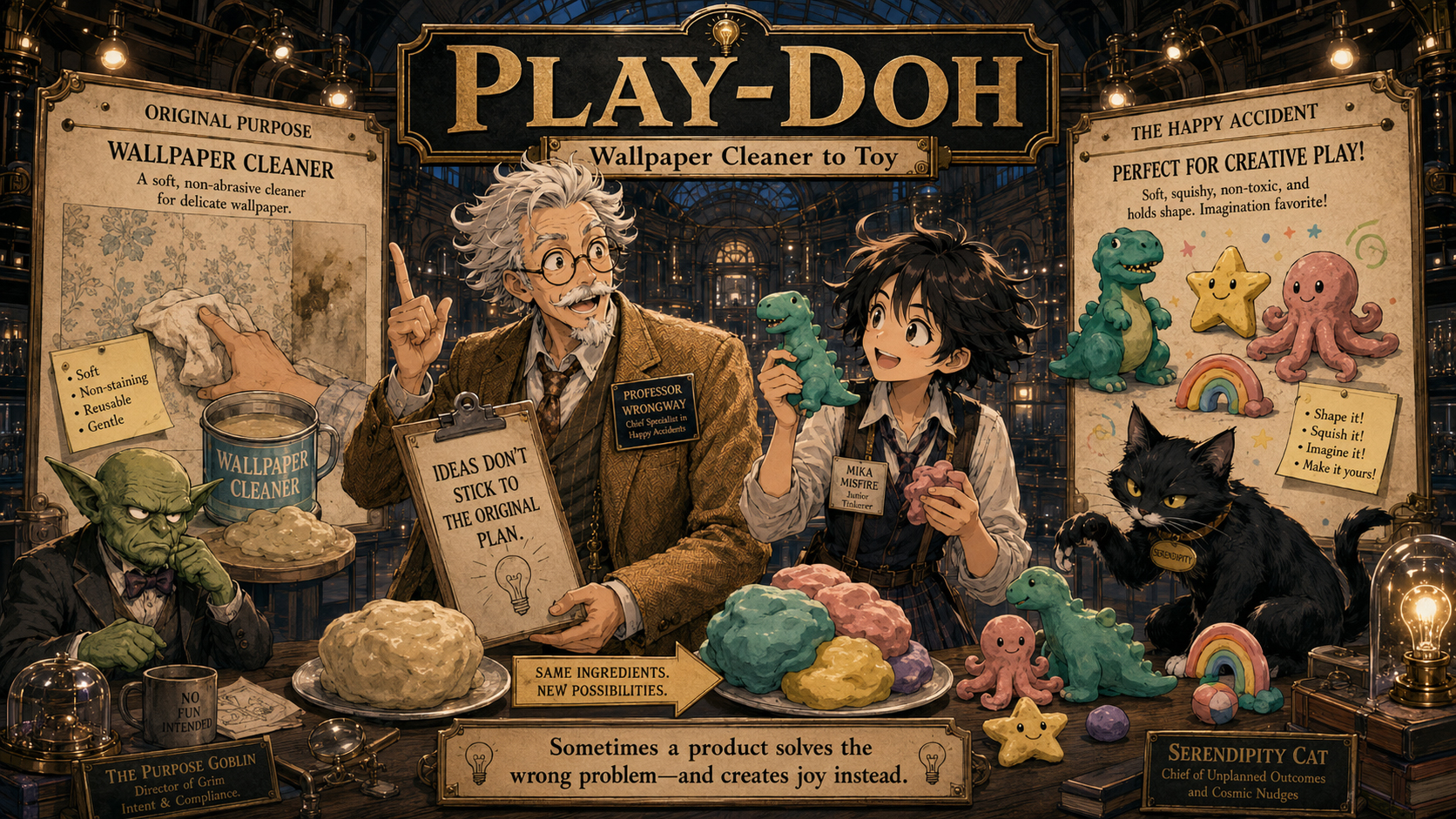
The cleaner lost its chore. The material found play, color, and imagination.
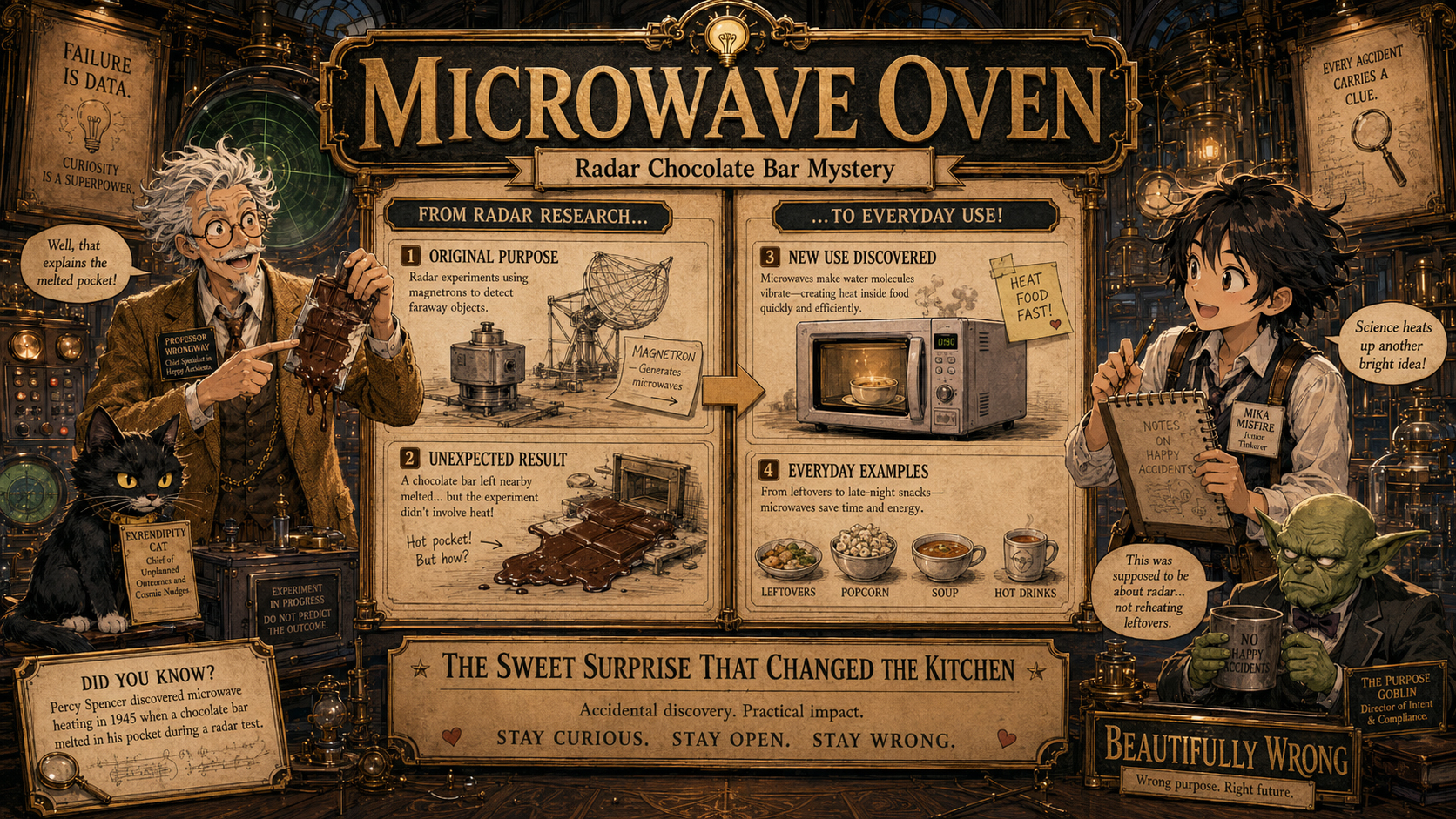
The radar lab was not cooking, but the heating clue changed kitchens.
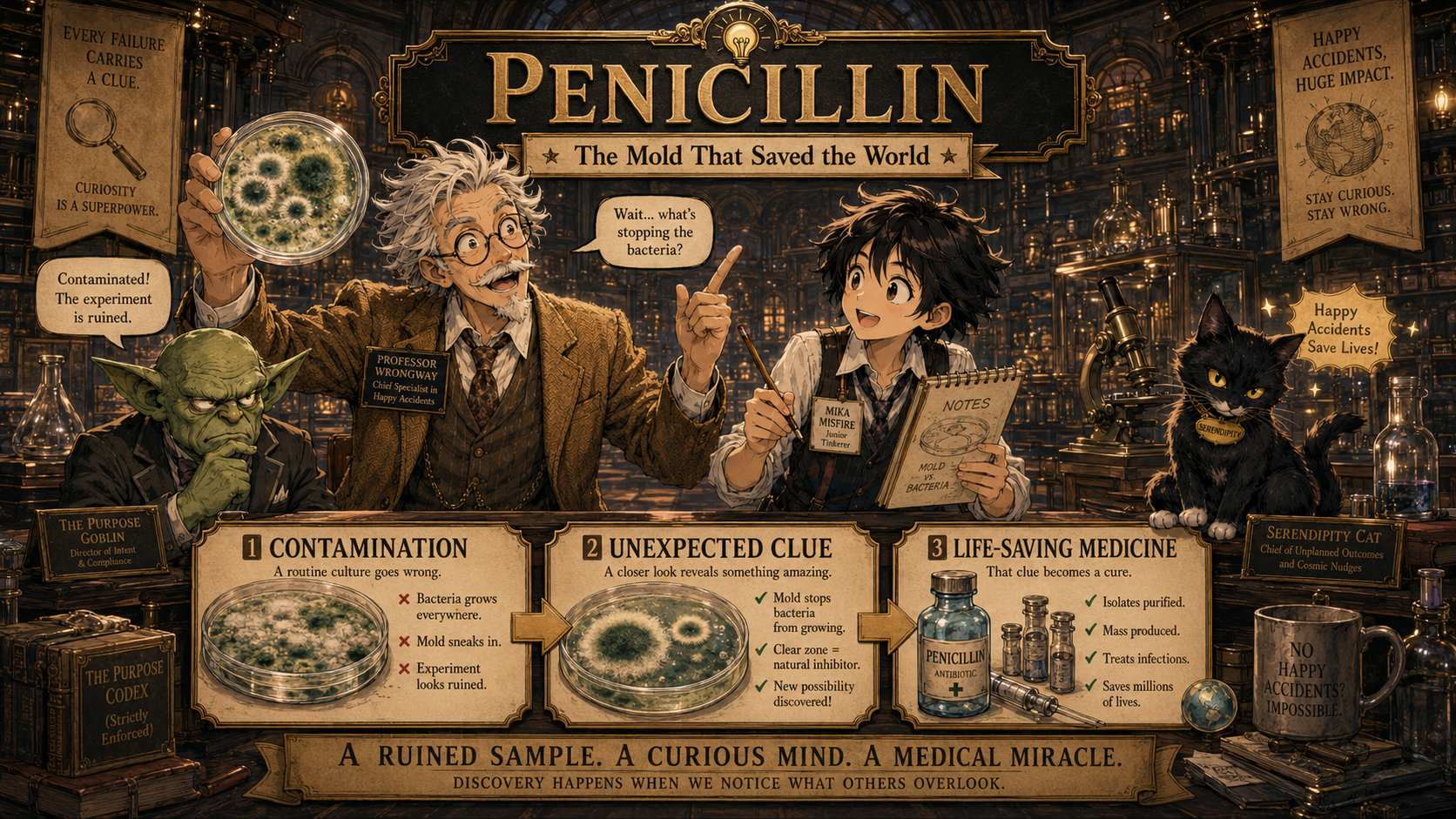
The contaminated sample was failed procedure, but valuable observation.
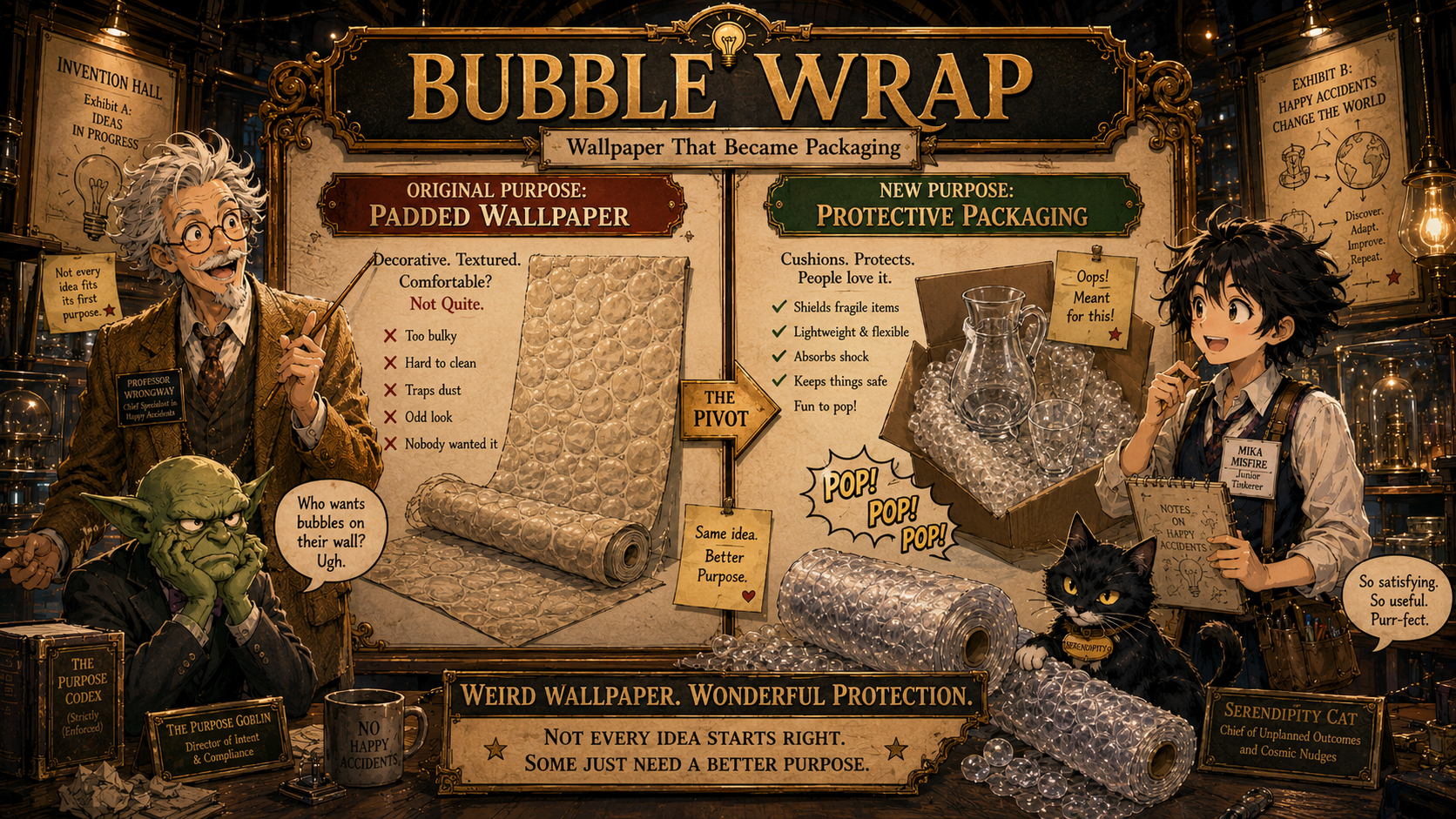
Wrong for walls. Right for boxes. Perfect for protection.
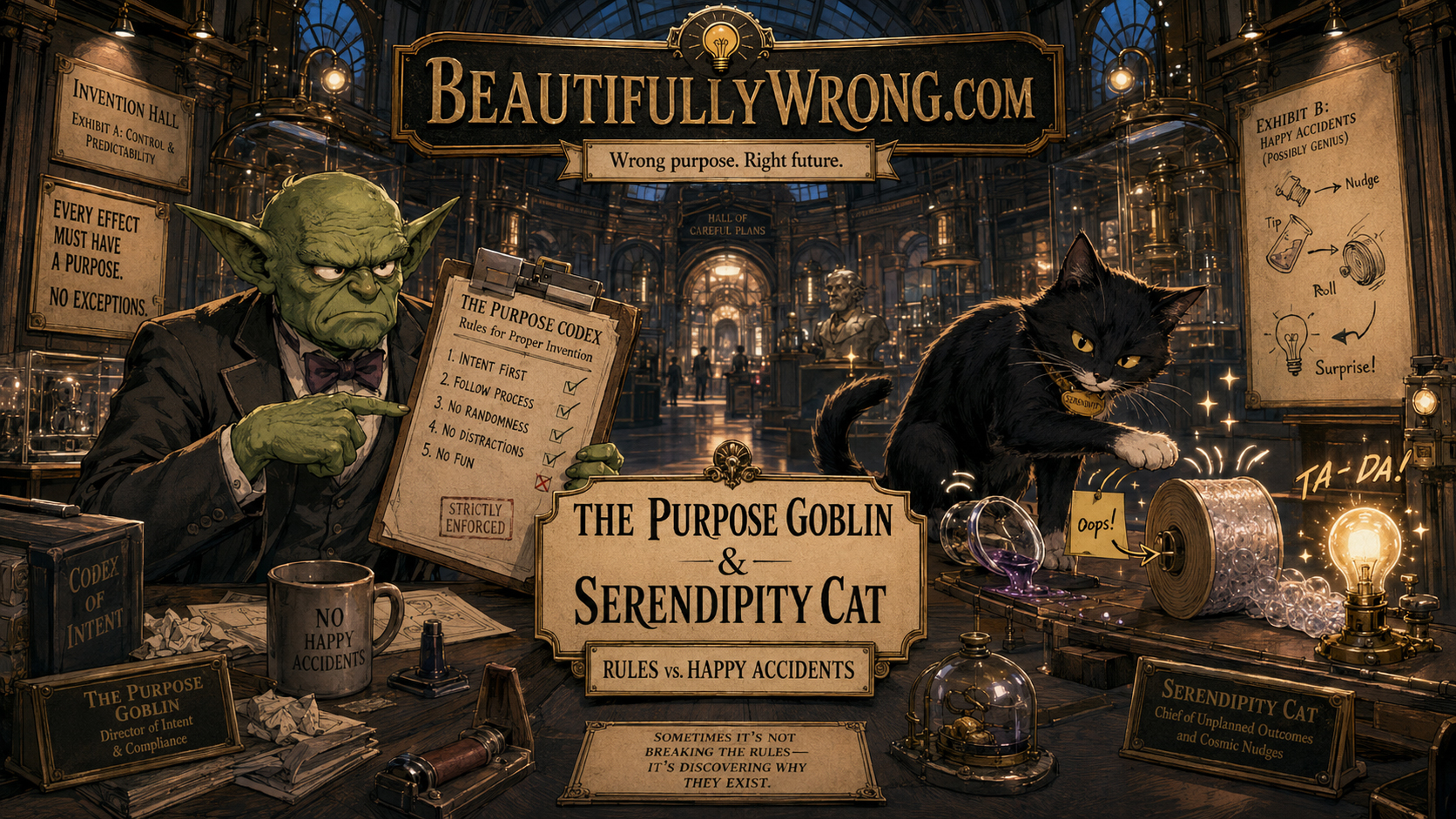
A failed first purpose is not proof of uselessness. It is an invitation to look again.
“Your Honor, the first purpose failed. The future did not.”
The Purpose Goblin puts failure on trial and argues that rejected inventions deserve closed files.
Mika presents the exhibits: weak glue, soft cleaner, melted chocolate, mold, and bubbles.
The Goblin realizes the original failure can be true while the later usefulness is also true.
Serendipity Cat rules in favor of curiosity. The Purpose Goblin loses, technically and dramatically.
Original purpose matters. Specifications matter. Safety matters. But none of those things prove that a rejected result has no future.
That is the final lesson: the Goblin is useful when he asks whether something met its first job. The museum is useful when it asks what else the result can do.
The Court of Curious Discoveries finds that failure of original purpose is not sufficient evidence of uselessness.
A result may be rejected for one job and still be valuable for another. The court therefore orders the Hall of Happy Accidents to remain open, the Purpose Goblin to revise his forms, and Serendipity Cat to stop sitting on the evidence.
Serendipity Cat declines to comply.
Return to the museum, revisit the exhibits, or start the manga from Episode 1.