The plan
A person or team sets out to make something for a defined purpose: a stronger glue, a cleaner, a medical test, a technical material, a tool.
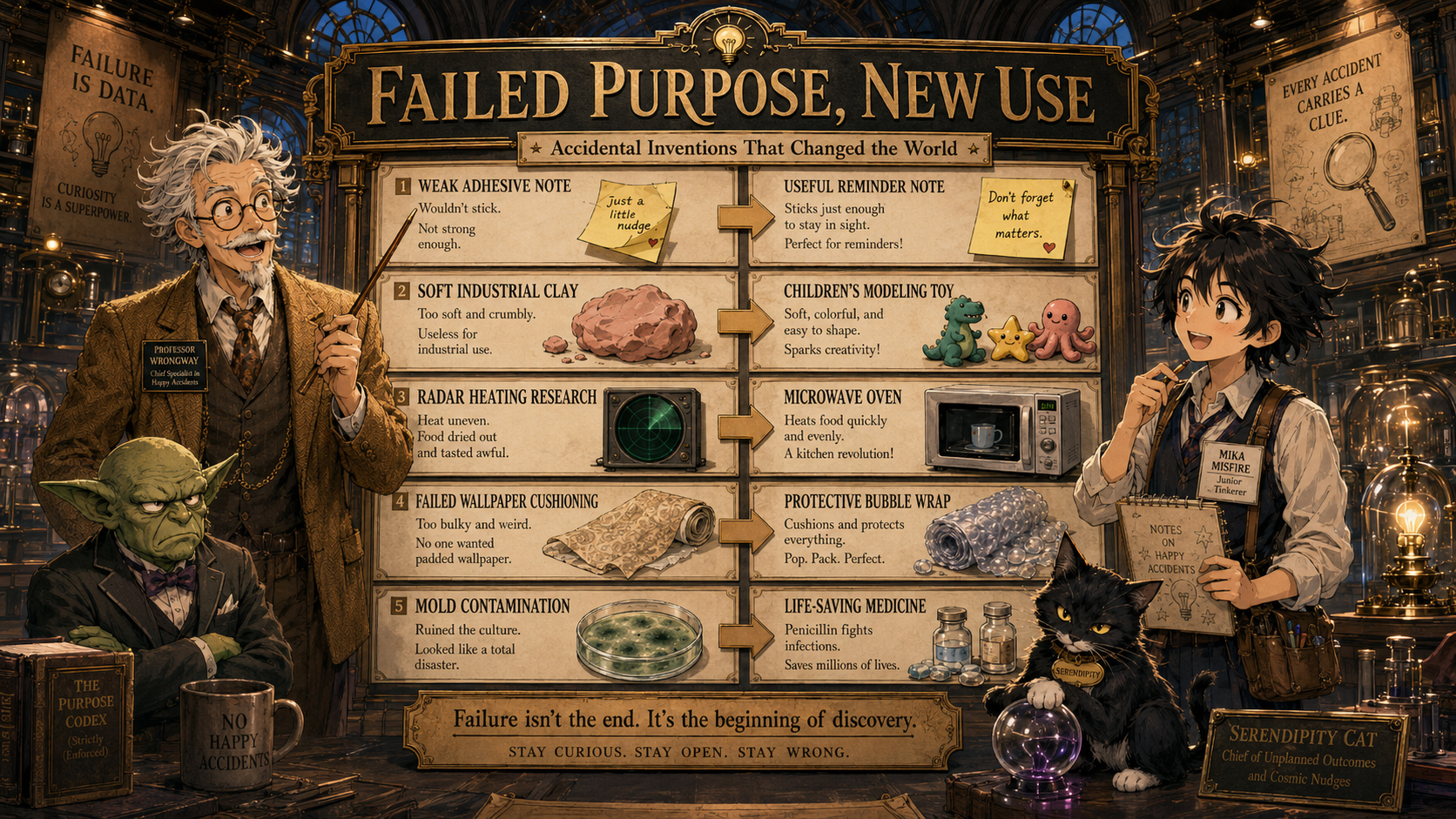
The first job failed. The material, clue, or behavior remained. That is where the second purpose begins.
A Beautifully Wrong story begins when something does not work as intended, but still reveals a property worth keeping.
The invention was supposed to solve a specific problem. It missed. It was too weak, too soft, too sticky, too odd, contaminated, awkward, or commercially misunderstood.
Someone noticed the “failure” had a hidden behavior. The weakness became usefulness. The flaw became the feature. The rejected result became evidence.
The invention did not fail because it was useless. It failed because it had not yet found its audience.
The first specification matters. But history often changes when someone stops staring at the rejected target and starts studying the unexpected behavior.
The Purpose Goblin wants to stamp “FAILED” and close the file. Professor Wrongway wants one more question answered: What is this mistake good at?
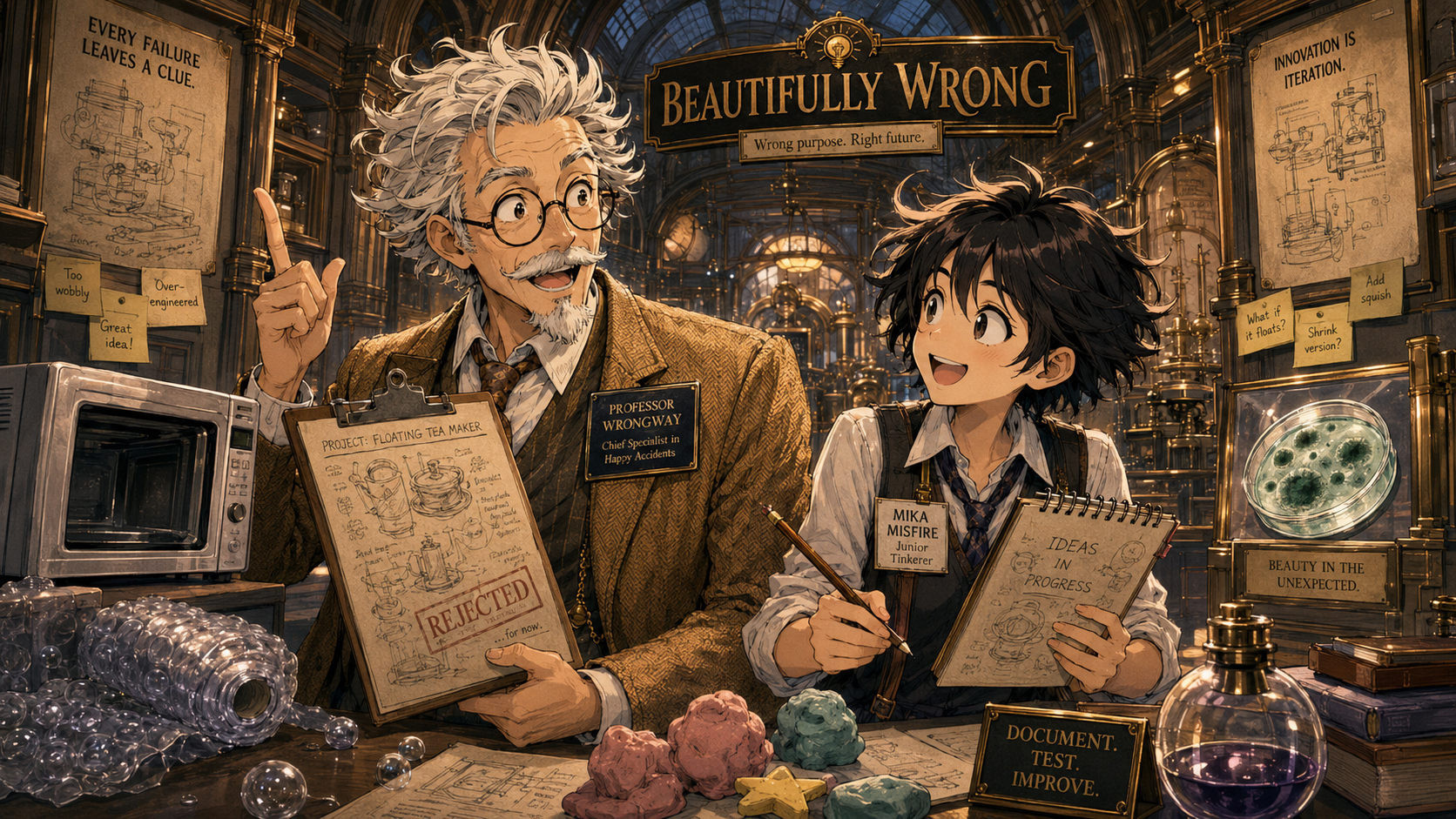
A person or team sets out to make something for a defined purpose: a stronger glue, a cleaner, a medical test, a technical material, a tool.
The result does not fit the original job. This is the moment where most stories end, and most useful detours are thrown away.
Someone notices a strange behavior: gentle adhesion, softness, heat, protection, inhibition, toughness, or surprising human response.
The result is reframed. It becomes a product, discovery, habit, medicine, tool, toy, or cultural turning point.
Beautifully Wrong is not a slogan that says every mistake is brilliant. It is a disciplined way of looking for useful signals inside failed outcomes.
A failed purpose becomes interesting only when the unexpected result has real value: it solves another problem, reveals a scientific clue, creates a new habit, or meets a human need better than the original plan did.
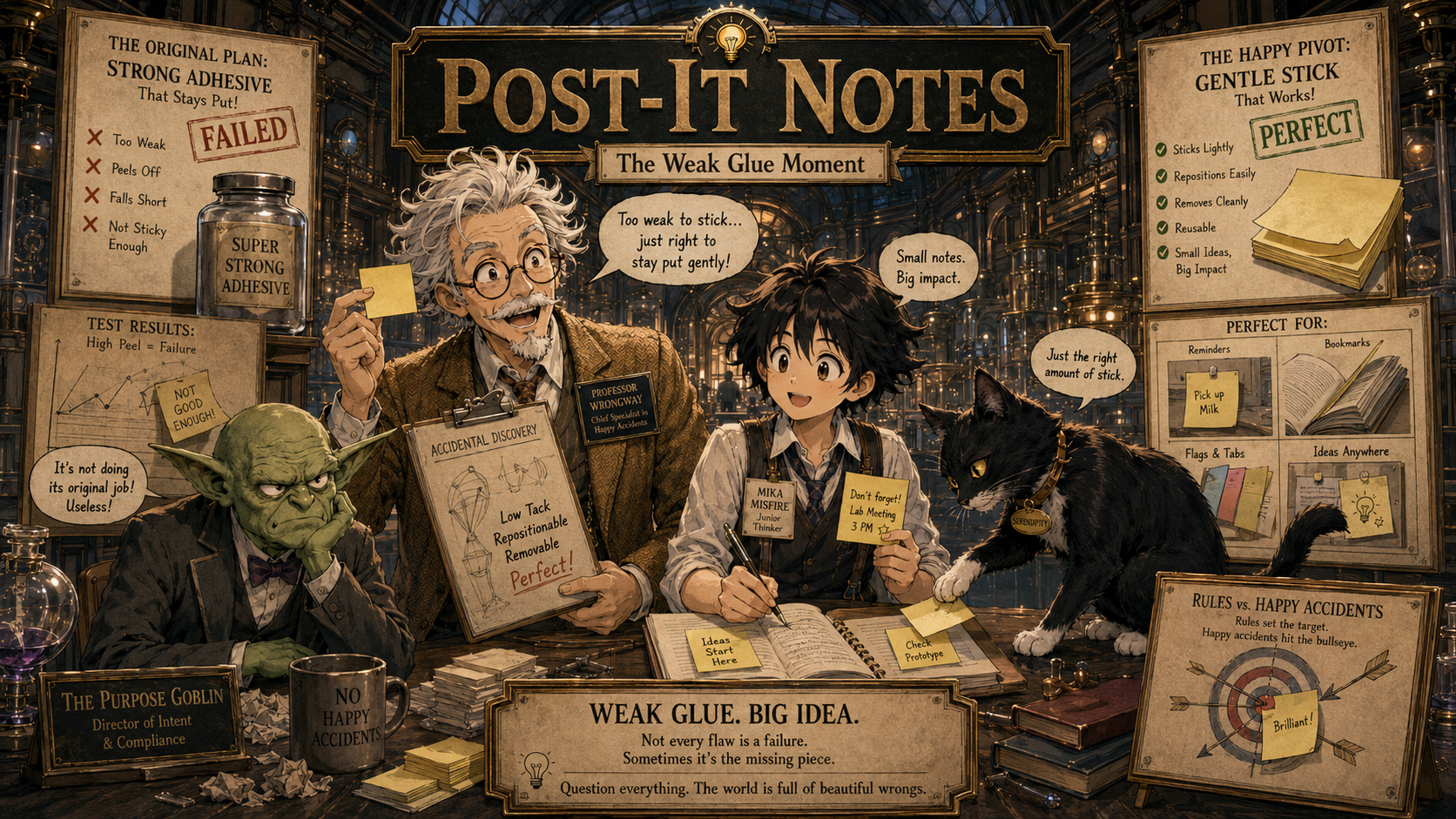
The glue failed as a strong adhesive because it was gentle and removable. That became the advantage.
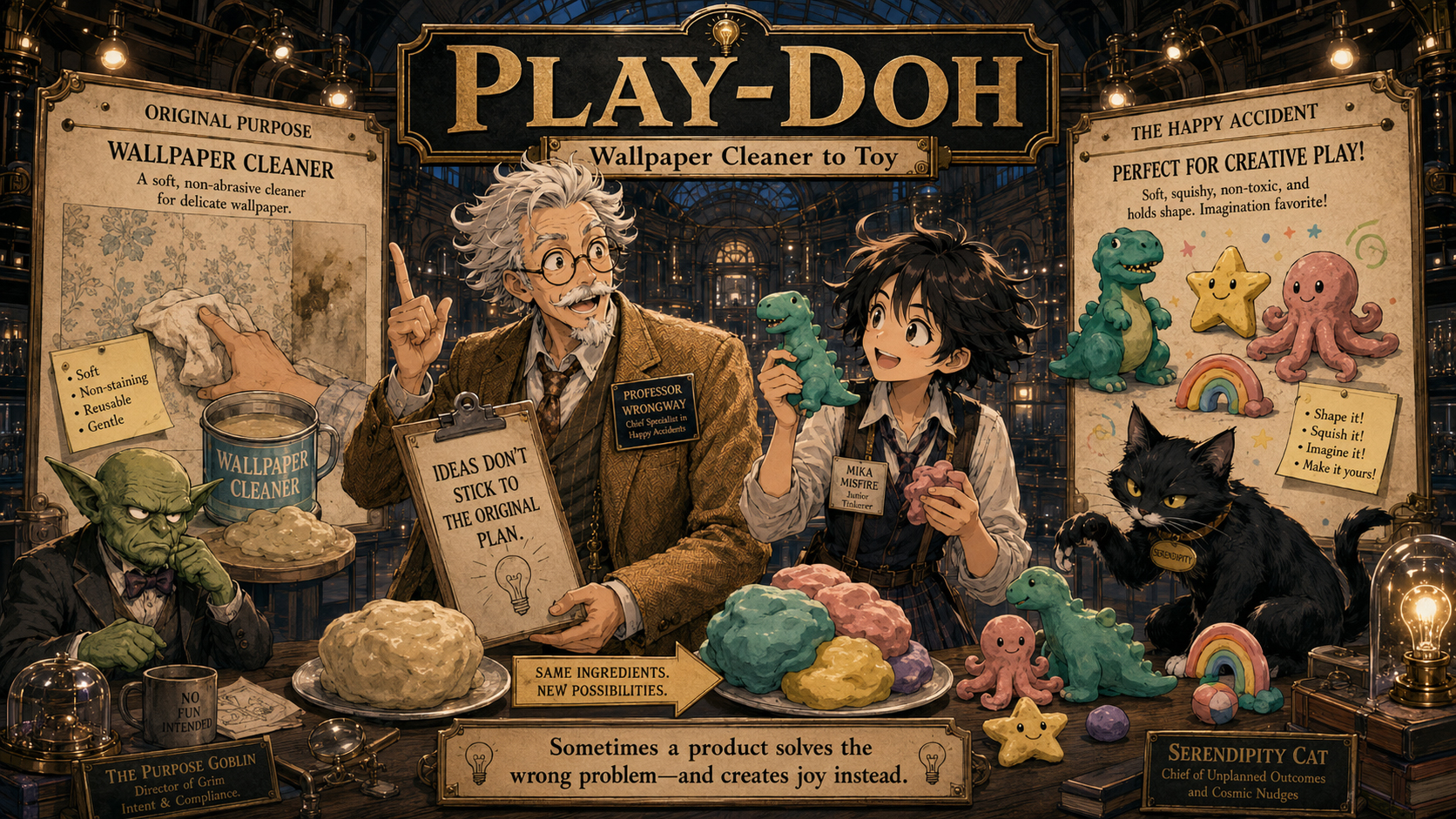
A cleaner lost its first purpose, but its softness and shapeability found a better one.
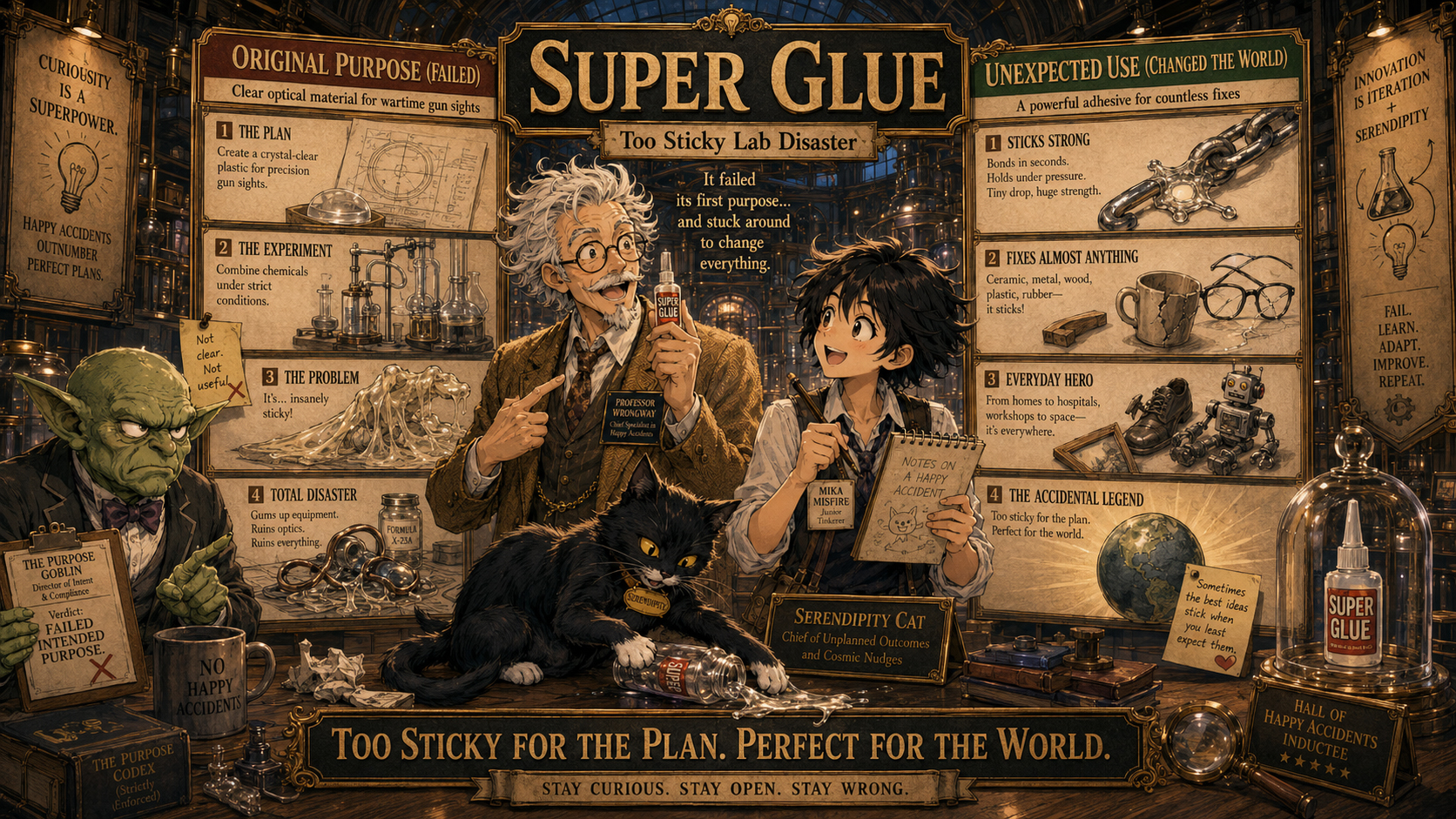
The problem was the property. Once the use changed, too sticky became perfect.
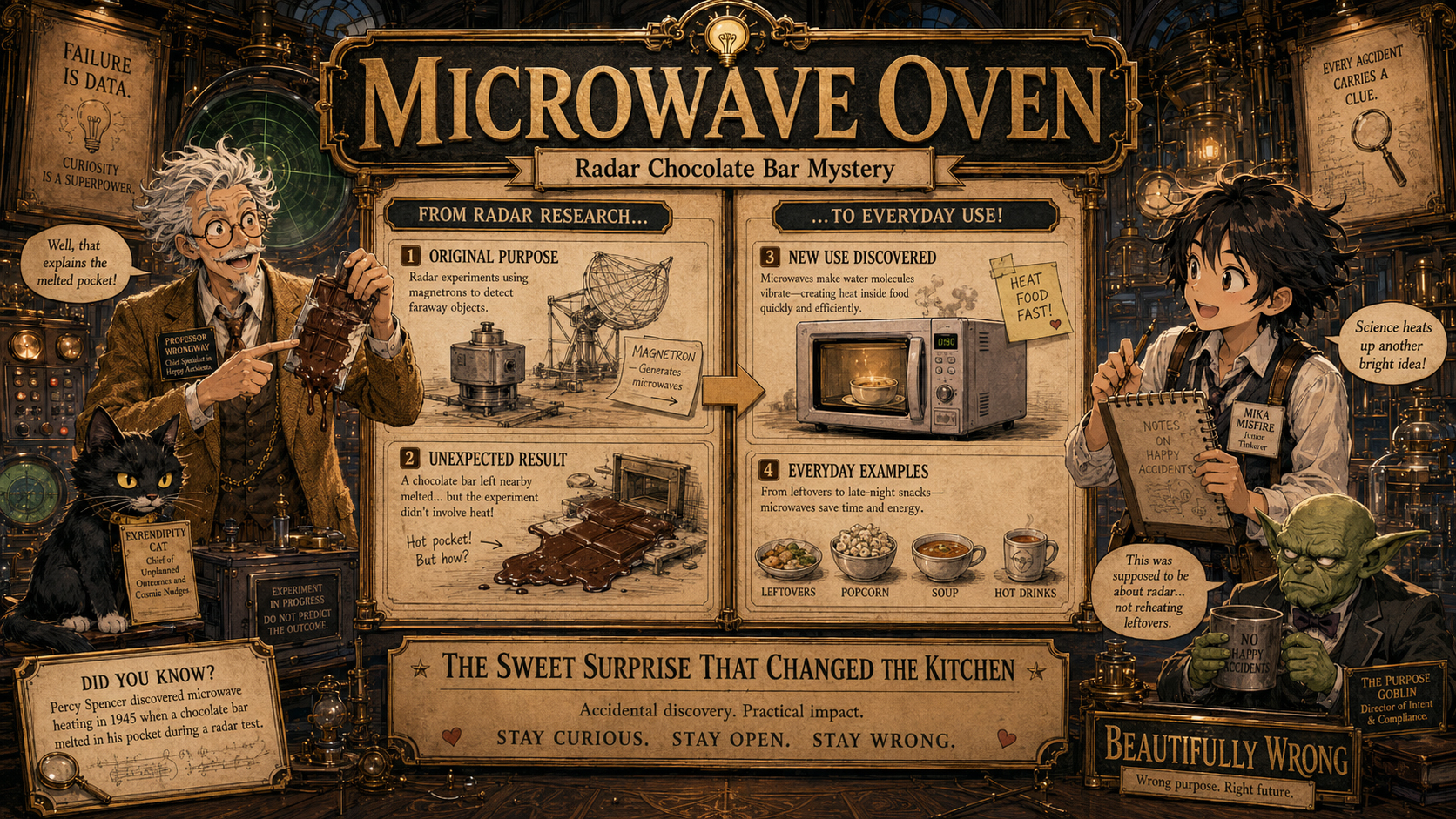
Unexpected heating during radar work became a practical kitchen technology.
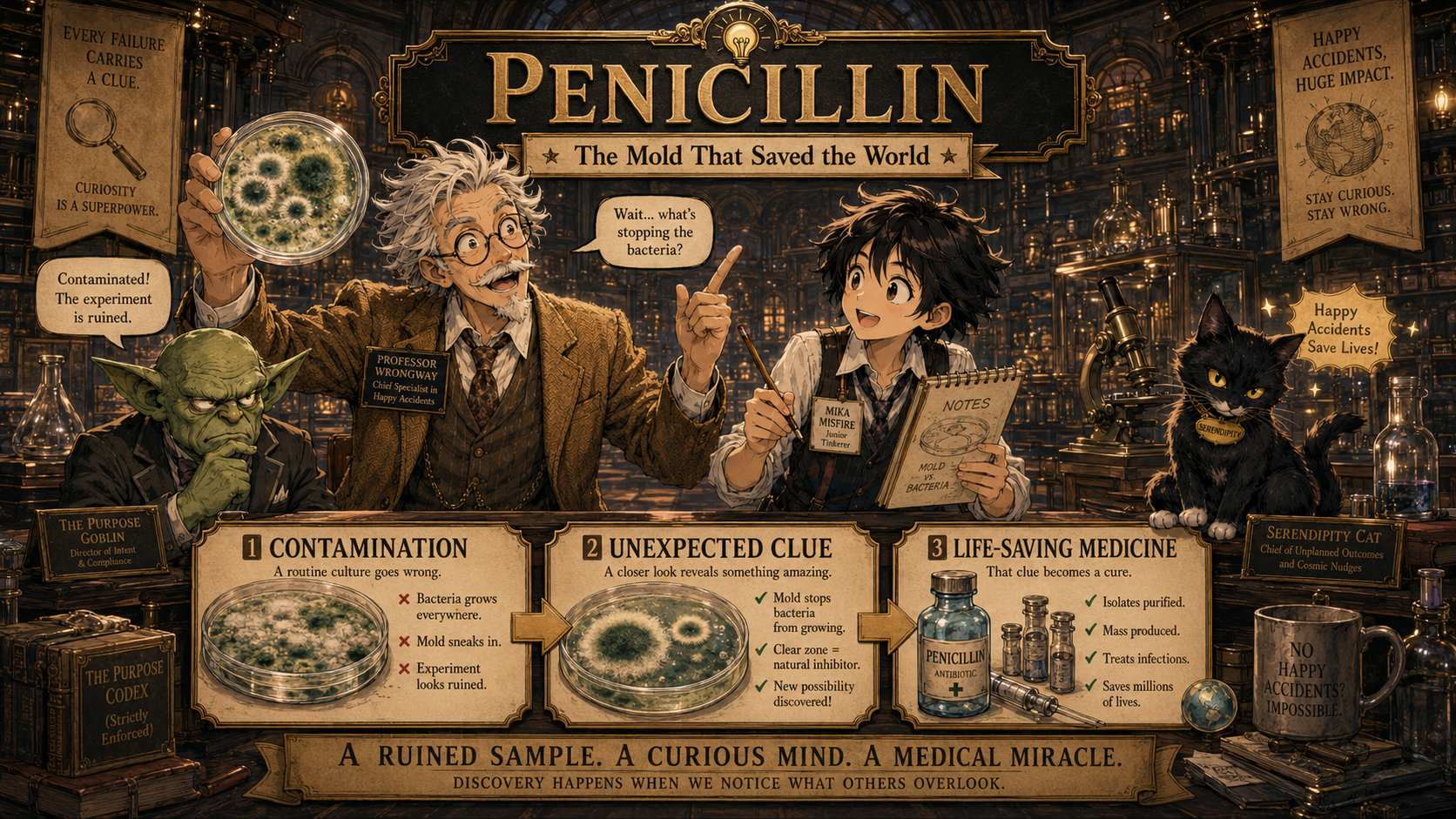
A contaminated culture revealed a clue that changed modern medicine.
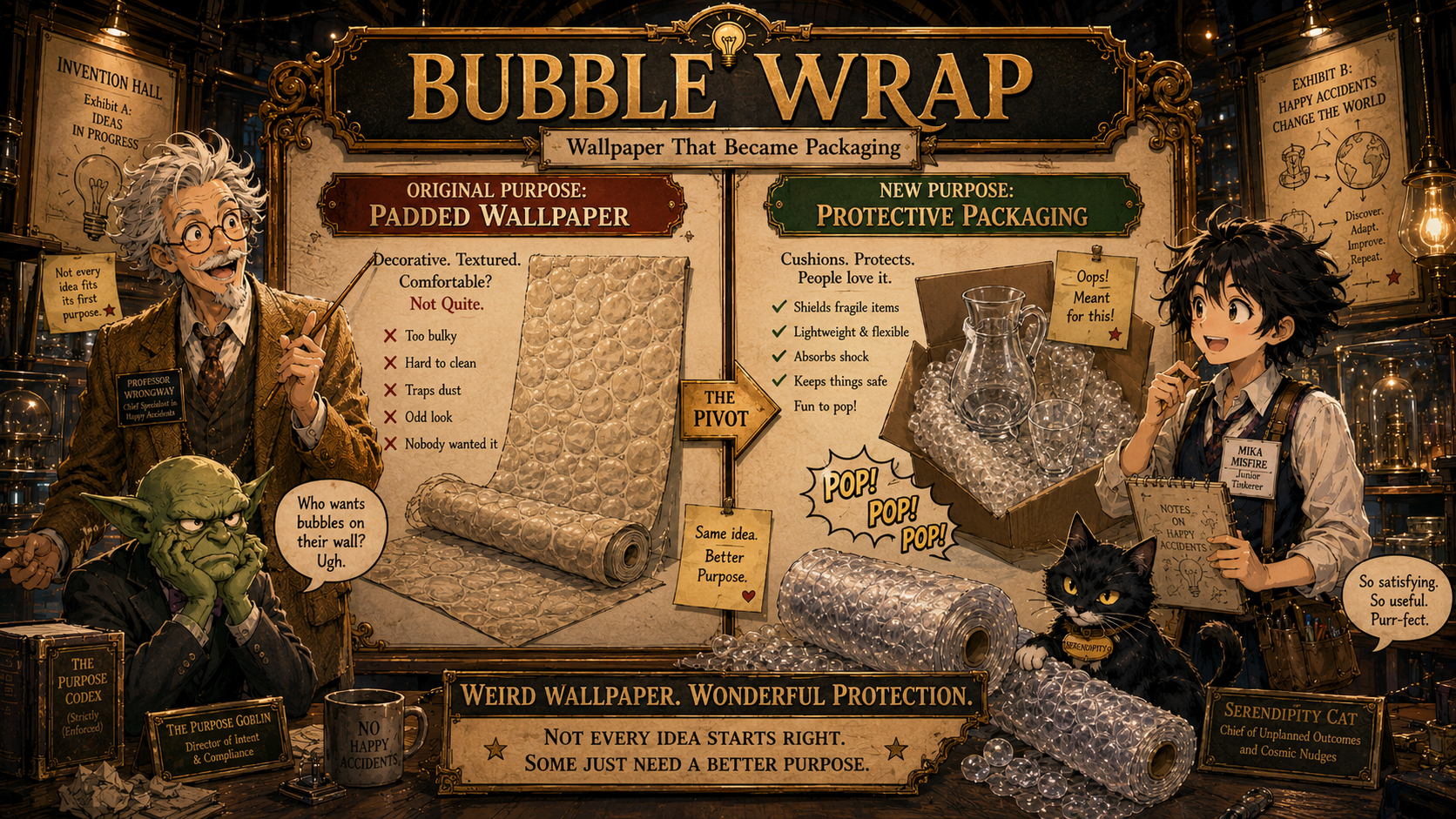
Strange wallpaper became excellent packaging once the purpose moved from walls to protection.
What else can this do?
See the Manga Episodes